MHA-MCL-2026-v2.1 · evidence and access cut-off 2026-07-30 · supersedes v2.0
Guideline downloads
Controlled publication files for specialist healthcare professionals. Every file below was generated from this page’s exact bytes and is listed with its SHA-256 in the release manifest.
The four v2.1 diagrams and their editable copies come from one model
The published v2.0 diagram is not carried forward. It encoded the v2.0 statements on the NICE positions for the TRIANGLE regimen, pirtobrutinib and brexucabtagene autoleucel, three of which v2.1 has corrected or withdrawn.
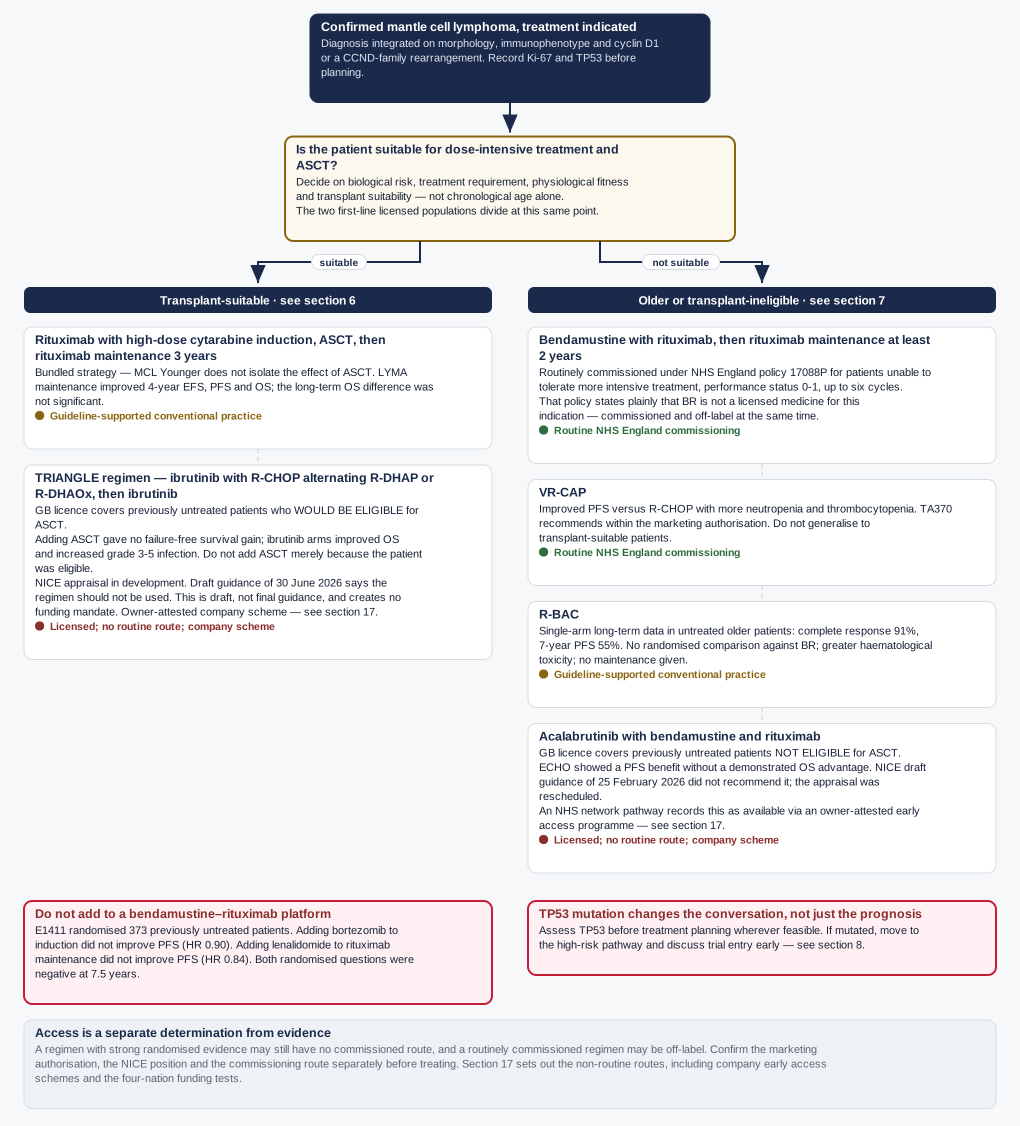
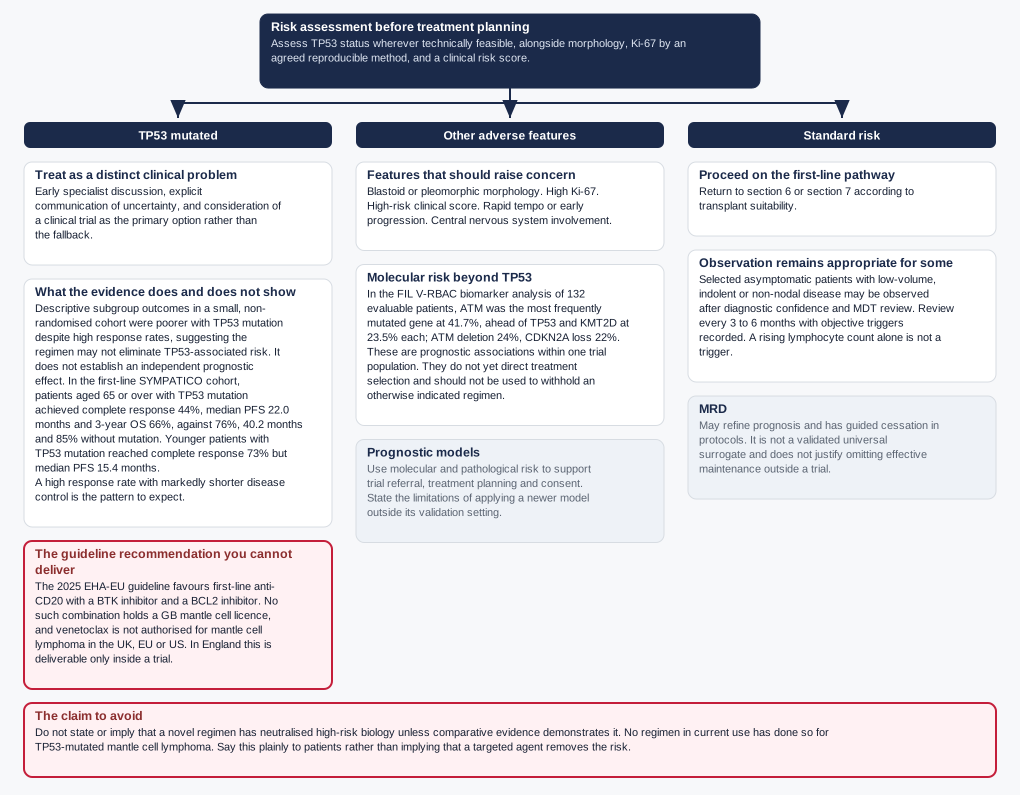
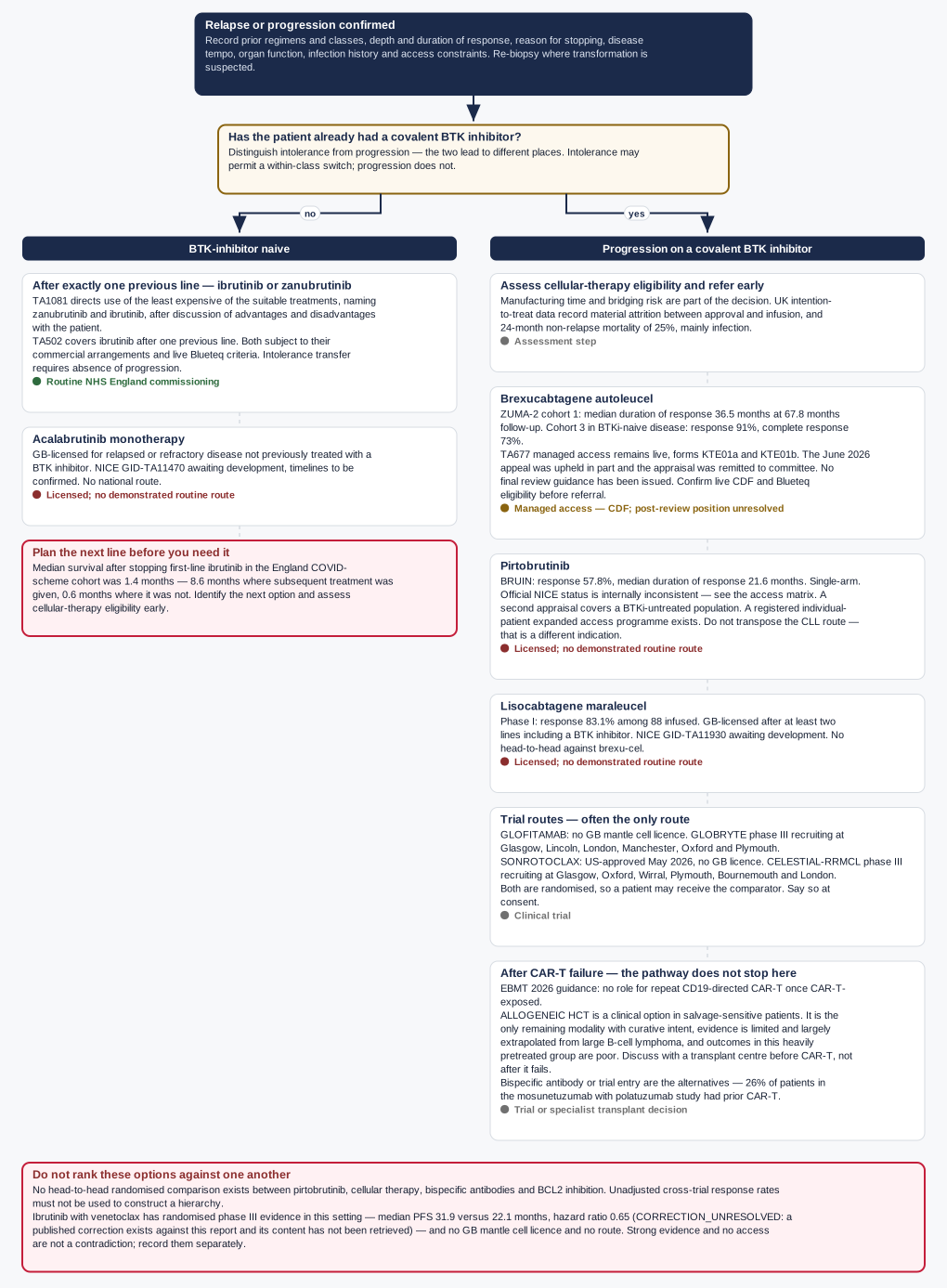
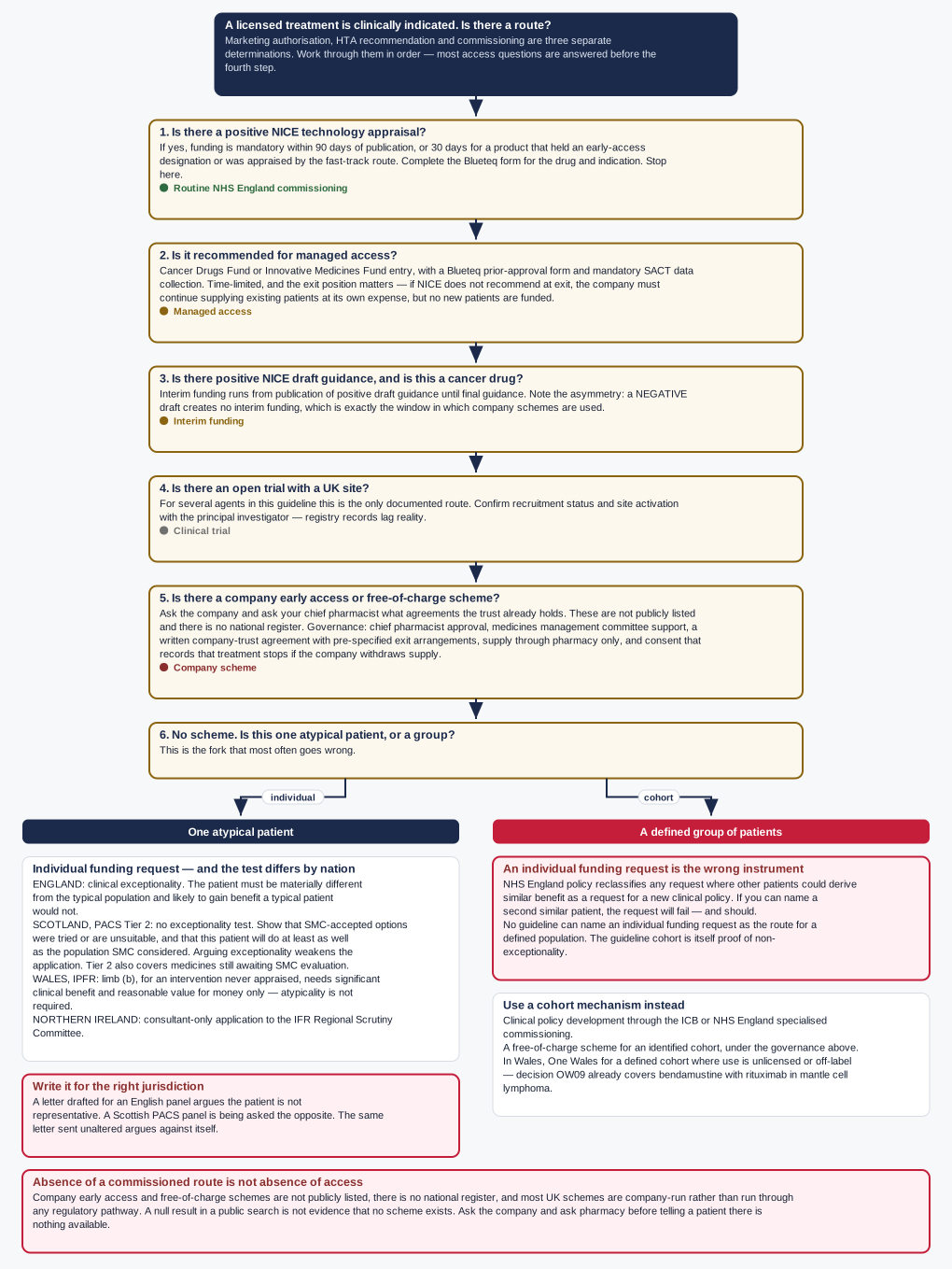
Four pathway diagrams are embedded in this guideline — first line in section 6, high-risk in section 8, relapsed or refractory in section 9, and the access-route flow in section 17. They are inline SVG generated from a single node model, so the page stays self-contained.
The downloadable SVG and the editable Excalidraw scene above are generated from that same node model and are verified against each other before release: each scene is restored and exported through the official Excalidraw library, and the export must carry an identical ordered set of text, with no text outside the drawing bounds and no text overlapping other text. The editable copy therefore cannot drift from the published one — the defect the earlier comparison found in the CLL package.
1. Scope and use
This specialist guideline covers adult mantle cell lymphoma from diagnosis through first-line and relapsed or refractory treatment. It separates clinical evidence, marketing authorisation, HTA recommendation and operational NHS access.
It is not a prescribing instruction, commissioning decision or substitute for the current SmPC, live national criteria, local SACT governance, MDT review and patient-specific judgement.
How to read the jurisdiction markers
This revision records evidence and regulatory positions from outside the United Kingdom because international divergence in mantle cell lymphoma is now large enough to mislead a reader working from an overseas algorithm. Two rules apply without exception.
First, a block headed outside the United Kingdom is context only. A United States or European Union approval does not create a Great Britain marketing authorisation, a NICE recommendation or an NHS England commissioning route, and must never be used to justify treatment here.
Second, where international practice and United Kingdom practice diverge, the divergence is stated explicitly rather than smoothed over. The three divergences that most affect reading of an overseas source are set out in section 14.
Relationship to the current United Kingdom society guideline
The British Society for Haematology guideline on the diagnosis and management of mantle cell lymphoma remains the current United Kingdom society document (2023; PMID 37880821; DOI 10.1111/bjh.19131). It predates the mature TRIANGLE analysis, the ECHO readout and acalabrutinib–bendamustine–rituximab licensing, lisocabtagene maraleucel in mantle cell lymphoma and the 2025 EHA–EU guideline. Where this document differs from BSH 2023, the difference reflects evidence published after that guideline and is identified in section 15. This document does not replace, and has no standing against, the BSH guideline. Its relapsed-setting recommendation remains directly applicable: Offer ibrutinib monotherapy as an approved and reimbursed standard of care option in the United Kingdom at first relapse (1B). Where the choice of ibrutinib, acalabrutinib or zanubrutinib is available, treatment should be individualised based on the specific toxicity profile of each agent (1B). Where a covalent BTKi has been used in first line as continuous therapy, consider clinical trials or immunochemotherapy at first relapse (2B).
2. Diagnosis and minimum dataset
Confirm MCL through integrated morphology, immunophenotype and demonstration of cyclin D1 overexpression or an appropriate CCND-family rearrangement. Record nodal versus non-nodal presentation and obtain expert review when morphology, immunophenotype or genetics are discordant.
For uncommon cyclin D1-negative disease, require expert haematopathology review and additional molecular confirmation before assigning the diagnosis.
In practice
Ask for an excision biopsy wherever a node is accessible. Send every case for expert haematopathology review, not only the difficult ones. Take hepatitis B, hepatitis C and HIV serology before any anti-CD20 antibody. Record Ki-67 with a stated method. Re-biopsy whenever possible when a new line of treatment is required, repeating Ki-67 and TP53 assessment on the new sample.
Getting the right tissue
An excision biopsy of a lymph node is the preferred specimen. Use a core biopsy only where no node is readily accessible. A fine-needle aspirate is not adequate to diagnose mantle cell lymphoma and should not be relied on.
Send the case for expert haematopathology review. The EHA–EU guideline asks for review of all cases, not only those where the phenotype is unclear (S01, graded V, A). Store additional material fresh-frozen where your service can do so — it is the material that later molecular work depends on.
Re-biopsy at each new line — this is how transformation gets found
Repeat the biopsy whenever a new line of treatment is needed, and repeat Ki-67 and TP53 testing on the new sample (S01, graded IV, B). Where mutational analysis is not available, p53 by immunohistochemistry is the fallback.
Clinical behaviour and imaging can raise the suspicion of transformation; histology is what confirms it. Treating a relapse on the biology of the original diagnostic sample means treating a disease the patient may no longer have.
Cyclin D1-negative disease
Where the phenotype fits mantle cell lymphoma but cyclin D1 immunohistochemistry is negative, ask for FISH for CCND1 rearrangement. If that is also negative, ask for CCND2 and CCND3 studies. SOX11 supports the diagnosis in this setting. Routine karyotyping adds little outside a trial.
Ki-67 and p53 — state the method, use one cut-off
Ki-67 only means something if the method and the threshold are stated. Two thresholds are in use: European sources take 30% as conferring inferior prognosis, American sources 50%.
Decision taken for this guideline
This document uses Ki-67 ≥30% as the high-risk threshold, following European practice, and records that the American threshold is 50%. Where you report or read a Ki-67 result, state which threshold is being applied — a report that says only “high” is not usable.
Two further points from S01. Ki-67 measured on bone marrow is less reliable and should not be used for prognostication. Where only p53 immunohistochemistry is available rather than mutational analysis, use a cut-off of 50% to call it positive.
Screening before anti-CD20 treatment
Test for hepatitis B, hepatitis C and HIV before starting treatment. Every immunochemotherapy regimen in this guideline contains an anti-CD20 antibody, and screening applies before any of them. It also applies before treatments carrying their own reactivation or immunosuppression risk, including BTK inhibitors and cellular therapy. BSH grades screening 1C (S42) and the EHA–EU guideline makes the same point.
What a positive result means depends on which marker is positive. HBsAg positivity, or evidence of previous exposure including anti-HBc positivity, requires formal reactivation-risk assessment and an antiviral prophylaxis or monitoring plan appropriate to the intended regimen. Isolated anti-HBs positivity — including vaccine-derived immunity — does not by itself require antiviral treatment. This requires pharmacy and hepatology verification before treatment.
Neither society specifies which antiviral agent or for how long. Follow your local viral hepatitis policy and involve hepatology where the result is positive. Record the result and the action taken.
Minimum dataset
Record morphology, including blastoid or pleomorphic features.
Record Ki-67 using an agreed reproducible method, and state the threshold applied.
Record hepatitis B, hepatitis C and HIV serology, and the action taken on any positive result.
Assess TP53 status before treatment planning when technically feasible.
Document a clinical risk score and the limitations of applying newer molecular models outside their validation setting.
3. Staging and risk
Baseline assessment should define disease distribution, tempo, symptoms, cytopenias, organ compromise, performance status, comorbidity and treatment fitness. TP53 mutation is a major adverse prognostic feature under intensive chemoimmunotherapy; it is prognostic rather than proof that one specific alternative strategy is superior.
Use molecular and pathological risk to support trial referral, treatment planning and consent. Do not claim that a novel regimen has neutralised high-risk biology unless comparative evidence demonstrates this.
Endoscopy
PET-CT does not reliably detect gastrointestinal involvement, so imaging alone does not exclude it. Consider upper gastrointestinal endoscopy where the result would change management — most often when disease looks limited and the decision rests on it.
Where the societies differ
The EHA–EU guideline asks for gastroscopy and colonoscopy with biopsies when staging suspected limited-stage disease (S01, graded V, B). BSH advises upper gastrointestinal endoscopy only, on the basis that PET-CT concordance is poor for gastric involvement but good enough for colorectal disease to make colonoscopy unnecessary in an asymptomatic patient (S42).
This guideline follows BSH. Perform upper gastrointestinal endoscopy; reserve colonoscopy for patients with lower gastrointestinal symptoms. Record which position you followed.
Features that define high risk
Four things move a patient into the high-risk group, and they are not interchangeable.
TP53 mutation or deletion — the strongest single factor, and the one that should change the conversation. See the high-risk section.
Ki-67 ≥30% — using the threshold set out in the diagnosis section.
Blastoid or pleomorphic morphology — an independent adverse feature recognised by EHA, BSH and EBMT. The EBMT cellular therapy guidance (S46) notes that morphology is used as high-risk defining where Ki-67 is not available, so where you have both, Ki-67 takes precedence.
High clinical risk score — MIPI and its variants. Combined scores incorporating Ki-67 and, more recently, TP53 status (MIPI53, S03) refine this, but each should be applied within the population it was validated in.
4. Observation where treatment is not required
Selected asymptomatic patients with low-volume, indolent or non-nodal disease may be observed after diagnostic confidence and MDT review. Review clinically and with laboratory assessment every 3–6 months; use imaging when clinically required. Record the reason for observation and objective triggers for reassessment. Rising lymphocyte count or imaging change alone should be interpreted in its clinical context.
5. Limited-stage disease
In practice
Between 5% and 15% of patients present with stage I or II disease. Stage it properly before deciding — PET-CT, bone marrow biopsy and upper gastrointestinal endoscopy. In genuinely low-risk stage I, observation or involved-site radiotherapy are both reasonable. Where high-risk features are present, treat as advanced disease.
This section exists because limited-stage disease is managed differently and the rest of this guideline assumes advanced disease. It rests on the EHA–EU guideline (S01), which gives four graded recommendations, and on BSH (S42). No primary trial evidence has been independently verified for this section — see the note on evidence tier below.
Staging first
Do not accept a limited stage without confirming it. Stage with PET-CT, bone marrow biopsy and endoscopy with biopsies (S01, graded II, B). Understaging is the main risk here, because the treatment decision that follows is materially less intensive.
Treatment by risk
Treatment by risk
Presentation
Option
EHA grade
Stage I, no risk factors
Observation, or involved-site radiotherapy
II, B
Intermediate risk or tumour load
Shortened systemic therapy followed by radiotherapy may be considered
IV, B
Stage II with high-risk features
Systemic treatment as for advanced disease
IV, B
The involved-site radiotherapy dose recorded in S01 is 24 to 36 Gy. Discuss every case with clinical oncology — this guideline sets the indication, not the plan.
Radiotherapy for symptom control
Low-dose palliative radiotherapy, 2 Gy given twice, can relieve symptoms in very frail patients, at diagnosis or at relapse (S01). It is well tolerated, it is often forgotten, and it does not require the patient to be fit for systemic treatment.
Evidence tier for this section
Everything above is G — adopted from a society guideline whose underlying trial evidence this document has not independently checked. That is a weaker footing than the randomised evidence cited elsewhere in this guideline, and it is labelled rather than blended in. See the evidence-to-recommendation model.
6. First-line pathway for younger or treatment-fit adults
Select treatment according to biological risk, treatment requirement, physiological fitness and suitability for dose-intensive treatment or ASCT—not chronological age alone.
First-line treatment algorithm. The split at transplant suitability governs the clinical pathway, and the two first-line marketing authorisations divide at the same point. It does not by itself determine eligibility for any company scheme — those terms have not been independently verified here. Scroll horizontally on a small screen. Access labels follow the key in section 18 and are separate determinations from the evidence.
Current conventional pathway when first-line covalent BTK inhibition is not routinely commissioned
Offer rituximab plus high-dose cytarabine-containing induction followed by ASCT consolidation and 3 years of rituximab maintenance. This is a bundled strategy: the MCL Younger trial does not isolate the independent effect of ASCT. Use the current network SACT/transplant protocol for the exact induction, conditioning, doses, administration and modifications.
After ASCT, the LYMA schedule was rituximab 375 mg/m² every 2 months for 3 years. It improved 4-year EFS, PFS and OS versus observation; prolonged follow-up retained the PFS benefit without a statistically significant OS difference. Confirm the current rituximab SmPC and local protocol before prescribing.
Before starting — fertility
Offer fertility counselling, and referral for preservation where appropriate, before any patient of reproductive age starts cytarabine-containing induction or proceeds to transplantation. BSH grades this 1B (S42) — a strong recommendation.
These are gonadotoxic regimens. The conversation has to happen before treatment starts, not at the point the patient asks about it afterwards. Record that it took place and what was decided, including where the patient declined.
EBMT 2026 position on omitting autologous transplantation
The EBMT cellular therapy recommendations (S46) accept that consolidative autologous transplantation may be omitted where minimal residual disease is undetectable at the 10-6 level after induction, and state that in standard-risk disease treated with a BTK inhibitor omission of auto-HCT should be considered, especially if MRD-negative (10-6) after induction. In high-risk disease treated with a BTK inhibitor, auto-HCT consolidation should be considered, especially if MRD-positive, and in TP53-mutated disease autologous transplantation is recommended only in trials.
Two cautions before acting on this. It requires MRD assessment at a sensitivity of 10-6, which is not uniformly available, and section 11 of this guideline holds that MRD is not a validated universal surrogate. The same document recommends rituximab maintenance (for 3 years) … after first-line consolidative auto-HCT for MCL, irrespective of concurrent BTKi maintenance, which is consistent with the LYMA schedule recorded above.
Substitution of obinutuzumab for rituximab in a transplant-eligible pathway has been studied prospectively in LyMa-101 with propensity-matched comparison against LYMA controls (S32). The comparison is not randomised, the matched analysis is susceptible to residual confounding, and obinutuzumab has no mantle cell lymphoma marketing authorisation. Do not substitute outside a trial.
TRIANGLE-derived pathway
The mature TRIANGLE analysis applies to adults aged 18–65 who matched that protocol. In the overall trial population, adding ASCT to the studied ibrutinib-containing regimen did not demonstrate an additional failure-free survival advantage, while ibrutinib-containing arms improved reported overall survival versus control and increased infection burden.
Do not apply that overall result categorically to every biologically high-risk patient. An unplanned subgroup analysis suggested a possible benefit from ASCT in high-risk disease. It is unplanned and hypothesis-generating, so it does not establish a benefit either — but it is a reason to keep individual biological risk in the decision rather than treating the headline result as settling it.
The exact ibrutinib regimen has a GB marketing authorisation. The NICE appraisal remains in development, and draft guidance of 30 June 2026 says the regimen should not be used in this population. No final guidance exists, so there is no funding mandate either way.
Corrected 30 July 2026 — the June 2026 draft guidance does exist
An earlier working copy of this revision withdrew the v2.0 statement that a June 2026 draft recommendation exists. That withdrawal was wrong and has been reversed. The withdrawal rested on the absence of any draft-guidance entry in an automated read of the project page, together with an HTTP 403 on the documents tab. Absence from a partial page render was treated as evidence of absence, and it should not have been.
An independent audit on 30 July 2026 retrieved the official document. NICE published draft guidance on 30 June 2026 for GID-TA11802 / ID6596, whose recommendation 1.1 states that the specified ibrutinib-containing regimen should not be used for untreated adult mantle cell lymphoma when autologous stem-cell transplantation is suitable.
This is draft guidance, not final guidance. It creates no NICE funding mandate and it is not a final negative recommendation. The appraisal remains in development. Check the live project status before relying on it. Source: nice.org.uk/guidance/gid-ta11802/documents/draft-guidance (verified by independent audit on 30 July 2026 from the official NICE document; this document’s own automated retrieval returned HTTP 403 and could not reproduce it).
Do not present this pathway as routinely commissioned NHS treatment. If it is used through an authorised funding route, follow the exact SmPC regimen and do not add routine ASCT solely because the patient was initially transplant-eligible.
Rituximab maintenance within a TRIANGLE-derived pathway is recommended by the EHA–EU guideline, but the supporting TRIANGLE maintenance analysis was non-randomised and recorded more serious infection. It must not be represented as a risk-free default.
Circulating tumour DNA and circulating tumour cell dynamics were measured prospectively within TRIANGLE (S33). Molecular response was faster in ibrutinib-containing arms and the excess risk carried by TP53 mutation appeared attenuated relative to the control arm. This is an exploratory biomarker substudy in a subset, it does not establish that TP53-associated risk has been removed, and it must not be used to justify withholding trial referral.
Long-run outcome context
A pooled individual-patient analysis of six randomised phase III trials conducted between 1996 and 2020 (S34) recorded a substantial improvement in survival for patients aged 65 or under with advanced-stage disease: median overall survival 4.9 years in the earliest treatment era, 13.8 years in the middle era, and not reached in the most recent, with 5-year overall survival rising from 49% to 84%. The same analysis recorded a far smaller gain in older and transplant-ineligible patients, from 3.8 to 4.8 years. Use this to frame prognosis honestly at diagnosis, and note that the gain is concentrated in the population this section covers.
Outside the United Kingdom — first-line ibrutinib
The regulatory position on ibrutinib in mantle cell lymphoma diverges sharply and this is the single most important reason not to read an overseas first-line algorithm directly.
United States: the ibrutinib mantle cell lymphoma indication was withdrawn. The manufacturer requested voluntary withdrawal of the accelerated approval on 6 April 2023 and the Federal Register withdrawal was effective 18 December 2023. A current United States algorithm therefore contains no ibrutinib option in mantle cell lymphoma at any line.
European Union: the ibrutinib mantle cell lymphoma indications are retained, including the TRIANGLE-derived first-line regimen for adults who would be eligible for autologous stem-cell transplantation, and relapsed or refractory monotherapy.
United Kingdom: a GB marketing authorisation covers the first-line regimen, and ibrutinib remains routinely commissioned in the relapsed setting after exactly one previous line under TA502. A United Kingdom clinician therefore has an option that a United States clinician does not.
7. First-line pathway for older or transplant-ineligible adults
Treatment selection should integrate disease tempo, TP53 status, frailty, renal function, infection risk, cardiac and bleeding risk, drug interactions, treatment duration, patient preference and confirmed access.
Clinically actionable options
Bendamustine–rituximab: offer as a standard first-line immunochemotherapy option when clinically appropriate, followed in responders by rituximab maintenance for at least 2 years. The BR comparison in StiL was a mixed indolent/MCL population, and maintenance-after-BR evidence includes observational data; retain those limits. Use the current local/network SACT protocol for exact doses and modifications.
VR-CAP: consider as an alternative for previously untreated adults for whom HSCT is unsuitable. It improved PFS versus R-CHOP but caused more neutropenia and thrombocytopenia. NICE TA370 recommends it within its marketing authorisation. Rituximab maintenance for at least 2 years is an EHA–EU guideline recommendation and was not tested in the original VR-CAP trial.
R-BAC: rituximab, bendamustine and cytarabine has single-arm prospective long-term follow-up in previously untreated older patients, with complete response 91%, 7-year PFS 55% and OS 63% and no maintenance given. It is a recognised option in this population but has no randomised comparison against BR and no regimen-specific technology appraisal; haematological toxicity is greater than with BR and dose attenuation in the frail is essential.
The frail patient is a separate question
In practice
Assess frailty with a formal tool, not an impression. Consider geriatrician review and pre-phase steroids. Where cytotoxic treatment is still appropriate, use an attenuated regimen rather than a full-dose one the patient cannot finish.
“Older or transplant-ineligible” and “frail” are not the same thing, and treating them as one category is how frail patients end up on regimens designed for fitter ones. Median age at diagnosis is around 70, so this is not a small subgroup.
BSH advises that formal frailty assessment tools are preferred over informal methods as they are more sensitive (S42), and names three: the Geriatric 8, a three-to-five minute screen; the Cumulative Illness Rating Scale for Geriatrics; and the Geriatric Assessment in Haematology, developed specifically for haematological malignancy and taking ten to fifteen minutes.
Two graded BSH recommendations follow, both 2B. Consider review by a geriatrician and pre-phase steroids for frail patients with MCL. And where cytotoxic therapy remains appropriate, consider R-chlorambucil, R-CVP, attenuated R-bendamustine or attenuated R-CHOP.
Frailty is not a reason to withhold treatment, and it is not a reason to give full-dose treatment either. It is a reason to choose differently, and to say why in the notes.
Two additions that the randomised evidence does not support
E1411 randomised 373 previously untreated patients, 87% aged 60 or over, in a two-by-two design (S35). Adding bortezomib to bendamustine–rituximab induction did not improve progression-free survival (median 6.4 versus 5.5 years; hazard ratio 0.90, 90% CI 0.70–1.16). Adding lenalidomide to rituximab maintenance did not improve progression-free survival (median 7.2 versus 5.9 years; hazard ratio 0.84, 90% CI 0.62–1.15). Both randomised questions were negative at 7.5 years of follow-up. Do not add either agent to a bendamustine–rituximab platform outside a trial.
Trial evidence that does not create routine NHS England access
ENRICH: ibrutinib–rituximab improved PFS over the pooled immunochemotherapy control but did not establish superiority over BR specifically. No first-line NICE or national CDF route was identified.
ECHO: acalabrutinib plus BR improved PFS without a demonstrated OS advantage. It is licensed in Great Britain, but NICE GID-TA11091 / ID6155 remains unfinished. Draft guidance published for consultation on 25 February 2026 did not recommend the combination, on the stated basis that there is not enough evidence to determine whether it offers value for money in this population; consultation ran to 18 March 2026. The displayed expected publication date of 4 June 2026 has passed, and the project note records that following on from advice received from the company this appraisal will be rescheduled to align with latest regulatory expectations. Draft guidance is not final guidance.
SHINE: ibrutinib plus BR improved PFS without an OS advantage and increased grade 3–4 toxicity. No first-line NICE or national CDF route was identified. A pre-specified secondary analysis reports longer progression-free survival among patients achieving complete response, which is a prognostic association within responders and not evidence of an overall survival gain.
Ibrutinib–venetoclax in an older or TP53-mutated first-line population: the open-label first-line cohort of SYMPATICO treated 78 patients aged 65 or over, or younger with TP53 mutation, with non-blastoid disease (S36). Complete response was 69%, overall response 95%, median progression-free survival 40.2 months and 3-year overall survival 79%. The combination has no Great Britain mantle cell lymphoma marketing authorisation, and the NICE appraisal was suspended on 20 January 2026 because an MHRA application was no longer being pursued. This is an important dataset with no route to the patient in England outside a trial.
Outside the United Kingdom — first-line acalabrutinib with bendamustine–rituximab
Acalabrutinib with bendamustine and rituximab is approved for previously untreated transplant-ineligible mantle cell lymphoma in the United States (16 January 2025, full approval on the ECHO trial) and in the European Union (European Commission approval 6 May 2025). At the same date the United States converted the relapsed or refractory acalabrutinib monotherapy accelerated approval to traditional approval.
In England the combination is licensed but has no final NICE recommendation and no demonstrated national commissioning route. A clinician reading a United States or European treatment algorithm will find this regimen presented as a first-line standard; it is not routinely available here.
8. TP53-mutated and other high-risk MCL
TP53-mutated disease should prompt early specialist discussion, explicit communication of uncertainty and consideration of an appropriate clinical trial. BOVen and other response-adapted novel combinations show activity and feasibility, but available single-arm studies do not prove comparative superiority or elimination of TP53-associated risk.
High-risk and TP53-mutated pathway, with the evidence limits stated alongside each branch. Scroll horizontally on a small screen. Access labels follow the key in section 18 and are separate determinations from the evidence.
Descriptive subgroup outcomes in a small, open-label, non-randomised cohort were poorer in patients with TP53 mutation despite high response rates, which suggests the regimen may not eliminate TP53-associated risk. The analysis does not establish an independent prognostic effect or a comparative treatment benefit, and it should not be read as one. In the first-line SYMPATICO cohort (S36), patients aged 65 or over without TP53 mutation achieved complete response 76%, median progression-free survival 40.2 months and 3-year overall survival 85%. In the same study, patients aged 65 or over with TP53 mutation achieved complete response 44%, median progression-free survival 22.0 months and 3-year overall survival 66%; younger patients with TP53 mutation achieved complete response 73% but median progression-free survival of only 15.4 months. A regimen can produce a high response rate in TP53-mutated disease and still deliver markedly shorter disease control.
MRD may refine prognosis and has been used to guide treatment cessation in selected studies. It is not a universal surrogate and does not justify omission of effective maintenance in routine practice.
Molecular risk beyond TP53 continues to be defined. In the FIL V-RBAC biomarker analysis of 132 evaluable patients, ATM was the most frequently mutated gene at 41.7%, ahead of TP53 and KMT2D at 23.5% each; ATM deletion was present in 24% and CDKN2A loss in 22%. These are prognostic associations within one trial population and do not yet direct treatment selection.
Outside the United Kingdom — society position on first-line TP53-mutated disease
The 2025 EHA–EU mantle cell lymphoma network guideline recommends that conventional chemoimmunotherapy is inadequate in TP53-mutated disease and favours first-line combinations of an anti-CD20 antibody with a BTK inhibitor and a BCL2 inhibitor, with strong encouragement of trial enrolment. No such combination holds a Great Britain mantle cell lymphoma marketing authorisation. Venetoclax is not authorised for mantle cell lymphoma in the United Kingdom, the European Union or the United States. In England this recommendation is deliverable only inside a clinical trial, and the guideline recommendation must not be read as evidence that a funding route exists.
9. Relapsed or refractory pathway
At each relapse, record prior regimens and classes, depth and duration of response, reason for stopping, current disease tempo, performance status, organ function, infection history and access constraints. Distinguish covalent-BTKi intolerance from progression.
Relapsed or refractory algorithm. The branch point is prior covalent BTK-inhibitor exposure, and the post-managed-access review for the cellular-therapy route remains unresolved following remittal to committee, and the live position must be confirmed before referral. Scroll horizontally on a small screen. Access labels follow the key in section 18 and are separate determinations from the evidence.
Options with a routine England route
After exactly one previous line in England, ibrutinib and zanubrutinib have separate positive NICE recommendations subject to their exact criteria. TA1081 states that zanubrutinib can be used as an option to treat relapsed or refractory mantle cell lymphoma in adults who have had 1 line of treatment only and directs clinicians to use the least expensive option of the suitable treatments (including zanubrutinib and ibrutinib), having discussed the advantages and disadvantages of the available treatments with the person with the condition. Both are subject to their commercial arrangements.
At covalent-BTKi progression, assess cellular-therapy eligibility and refer early where appropriate. Manufacturing time and bridging risk must be considered. The access position for cellular therapy is changing and is set out immediately below.
Cellular therapy — a live access question
At 67.8 months median follow-up in ZUMA-2 cohort 1, median duration of response with brexucabtagene autoleucel was 36.5 months and median overall survival 46.5 months. Cohort 3 of the same study subsequently treated 86 BTK-inhibitor-naive patients and reported overall response 91%, complete response 73% and 12-month progression-free survival 75%, with grade 3 or higher treatment-related events in 88% and four grade 5 treatment-related events (S37). United Kingdom intention-to-treat data record material attrition between approval and infusion and 24-month non-relapse mortality of 25%, mainly infection.
Corrected 30 July 2026 — the appeal decision is retrievable and the outcome is known
An earlier revision said the 9 June 2026 appeal decision could not be retrieved and its outcome was unknown. That is no longer defensible. The decision is published on the NICE project documents page and was downloaded and read during an independent audit on 30 July 2026.
The appeal panel upheld the appeal point concerning transparency and scrutiny of the NHS England CAR-T delivery tariff, raised by both the company and the patient organisations, and upheld the point that use of the McCulloch comparator data was unreasonable in the analysis performed. The remaining appeal points were dismissed. The appraisal was remitted to the appraisal committee for further consideration.
What this does and does not mean. It does not mean brexucabtagene autoleucel has received a positive final NICE recommendation. It does not mean routine access has ceased. It does mean the previous final-draft conclusion cannot be treated as the final outcome, that the appraisal is in progress following remittal, and that no final guidance has been issued. TA677 remains live. Confirm the current Cancer Drugs Fund and Blueteq position before referral. Source: nice.org.uk/guidance/gid-ta11545/documents/appeal-decision.
Lisocabtagene maraleucel has phase I activity after BTKi exposure with overall response 83.1% among 88 infused patients, but no demonstrated routine MCL route in England at the access cut-off; NICE GID-TA11930 is awaiting development.
Getting a patient to cellular therapy
In practice
Discuss high-risk patients with a CAR-T centre at first relapse, not later. Review them at least four-weekly, face to face, for the first three months. Image at 8 to 12 weeks. Do not stop a covalent BTK inhibitor abruptly. Avoid bendamustine if cellular therapy is a realistic plan.
The commonest reason a patient does not receive CAR-T is that the disease progresses while arrangements are being made. The operational steps below are the ones that change that, and they come from BSH (S42) and the EBMT cellular therapy guidance (S46).
Referral and review. BSH advises that high-risk patients should be discussed with a CAR T-cell centre at first relapse and followed closely: at least 4-weekly face-to-face appointments in the first 3 months. Patients with significant constitutional symptoms not improving after four weeks of a BTK inhibitor should have early re-imaging. All high-risk patients should have a first imaging response assessment as early as 8 weeks but no later than 12 weeks.
Do not stop a BTK inhibitor abruptly. BSH warns that abrupt cessation of ibrutinib at this stage should be avoided due to risk of tumour flare. EBMT advises maintaining BTK inhibition through leukapheresis where the patient is still responding. If you are planning to switch, plan the overlap.
Choose bridging with the right goal. EBMT states the aim plainly: treatment goal of holding/bridging is symptom control and keeping the patient stable rather than achieving minimal tumour load prior to CART. Trying to debulk aggressively before infusion is not the objective and may cost more than it gains.
Avoid bendamustine where you can. BSH notes it should be avoided due to its potential impact on T-cell fitness. This matters at the point you are choosing a bridging regimen, and it is a reason to think about the eventual CAR-T plan earlier in the disease course than feels necessary.
Predicting how long a second-line BTK inhibitor will last
The EHA–EU guideline describes a BTKi-MIPI to estimate treatment duration on a second-line covalent BTK inhibitor (S01). Its purpose is practical: identify in advance the patients likely to need something else within a short period, so that the next step can be arranged rather than improvised, and so that the BTK inhibitor is not stopped abruptly with the flare risk that carries.
Autologous transplantation at relapse
Autologous transplantation is not only a first-line consolidation question. The EHA–EU guideline records that it may be considered among standard-risk MCL patients (e.g., those lacking a TP53 mutation or biallelic deletion) who have not undergone ASCT in first remission, and in patients with a chemosensitive lymphoma (S01).
Two conditions do the work in that sentence: standard risk, and chemosensitive disease. The recommendation is directed at standard-risk, chemosensitive disease and should not be extrapolated into a routine recommendation for TP53-mutated or otherwise high-risk disease. It is not a stated contraindication either — such cases need individual expert review and, wherever possible, trial consideration. Chemosensitivity remains a separate requirement in its own right.
Sequencing cellular therapy, and what happens when it fails
The EBMT practice harmonisation and guidelines committee published dedicated cellular therapy recommendations for mantle cell lymphoma on 9 July 2026 (S46), developed from an international expert meeting held in Berlin in September 2025 and covering autologous transplantation, allogeneic transplantation and CAR-T together. It is the most specific guidance available on sequencing these modalities and it fills a gap this guideline previously left open.
Sequencing cellular therapy, and what happens when it fails
Setting
CAR-T
Allogeneic HCT
First line
High-risk disease, only in trials. Standard risk, no role.
No role outside of clinical trials.
Second line, BTK-inhibitor exposed
Clinical option, especially in those patients who progressed while still on BTKi, or within a clinical trial.
Consider as consolidation in salvage-sensitive patients who progressed on BTK-inhibitor-based first-line therapy, where CAR-T is unavailable.
Beyond second line
CAR-T-naive: standard of care. CAR-T-exposed: no role for repeat CD19 CART.
Clinical option in salvage-sensitive patients.
Allogeneic transplantation — the pathway has a terminus
Earlier revisions of this guideline stopped after cellular therapy and said nothing about what to do when it fails. That was an omission, and it matters, because allogeneic transplantation is the only remaining modality with curative intent.
The evidence is thin and much of it is extrapolated. The largest series of allogeneic transplantation after CAR-T failure is in large B-cell lymphoma, not mantle cell lymphoma, and reports 1-year overall survival of 59%, progression-free survival 45% and non-relapse mortality 22% in 88 patients. A Japanese registry analysis of 155 patients transplanted for relapsed or refractory mantle cell lymphoma in the post-ibrutinib era (S51) found autologous and allogeneic transplantation gave comparable median overall survival at 28 and 27 months, with disease status at transplant the dominant predictor for the allogeneic group — relapsed or refractory status carried a hazard ratio of 4.10 and failure to achieve complete remission 3.53.
The practical instruction is about timing. Salvage sensitivity and remission status at transplant drive the outcome, so a transplant discussion belongs before CAR-T, at the point of covalent BTK-inhibitor progression, rather than as an afterthought once CAR-T has failed and the patient is out of options and out of fitness. Involve the transplant centre early.
Other options after CAR-T failure are limited. Repeat CD19-directed CAR-T is not recommended. Bispecific antibody therapy has been studied in a population that included prior CAR-T exposure — 26% of the 42 patients in the mosunetuzumab with polatuzumab vedotin study (S40) had received it — but that agent combination is not licensed for mantle cell lymphoma anywhere. Trial entry is frequently the most realistic route.
Cellular therapy toxicity and the attrition problem
Two toxicity syndromes define the early post-infusion period and both need naming explicitly. Cytokine release syndrome and immune effector cell-associated neurotoxicity syndrome (ICANS) are graded and managed under the treating centre's own protocols; this guideline does not reproduce them and is not a substitute for them.
Their frequency in an older population is not trivial. In an EBMT registry analysis of 233 patients aged 70 or over treated with brexucabtagene autoleucel across 96 centres in 13 countries (S47), the 30-day cumulative incidence of any-grade cytokine release syndrome was 80%, grade 3 or higher 9%; for neurotoxicity the figures were 57% and 22%. One-year overall survival was 74%, progression-free survival 62% and non-relapse mortality 13%. Complete remission at day 100 was 78%.
Two findings from that analysis are useful at referral, with an important limit on both. Patients over 75 had outcomes comparable to those aged 70 to 75. On multivariable analysis, ECOG performance status of 2 or worse carried a hazard ratio of 4.50 for overall survival, while chronological age within the studied range was not independently associated with outcome.
That does not make age irrelevant to eligibility. This was a selected cohort of patients aged 70 or over who had already been chosen for brexucabtagene autoleucel, so it cannot answer whether age should influence selection in the first place. Assess age, performance status, comorbidity, disease status and patient preference together, without applying a rigid age cut-off in either direction.
Attrition between decision and infusion remains the practical constraint. United Kingdom intention-to-treat data record substantial loss between approval and infusion, most often from progressive disease. That is the argument for referring at progression rather than after a further line of therapy, and for planning bridging with the goal, in the EBMT formulation, of symptom control and keeping the patient stable rather than achieving minimal tumour load prior to CART.
Options with evidence but no routine England route
Pirtobrutinib has single-arm activity after covalent BTKi exposure, with overall response 57.8% and median duration of response 21.6 months in BRUIN. There is no demonstrated national MCL commissioning route.
Ibrutinib with venetoclax now has randomised evidence in the relapsed setting. SYMPATICO was a double-blind placebo-controlled phase III trial in 267 patients with one to five prior lines (S38); median progression-free survival was 31.9 months versus 22.1 months, hazard ratio 0.65 (95% CI 0.47–0.88), p=0.0052, with grade 3–4 neutropenia in 31% versus 11%. CORRECTION_UNRESOLVED — a published correction exists against this report and its content has not been retrieved, so these figures are not finally verified. Seven-year follow-up of the AIM study additionally documents durable remission and elective treatment interruption in a small MRD-negative subgroup (S39). None of this creates access: there is no Great Britain mantle cell lymphoma marketing authorisation for the combination and the NICE appraisal was suspended on 20 January 2026 because an MHRA application was no longer being pursued.
Glofitamab has fixed-duration phase I/II activity after prior BTKi, with overall response 85% and 74.2% among BTKi-exposed patients, but no current MCL marketing authorisation or routine commissioning route. The referable route in the United Kingdom is the GLOBRYTE randomised phase III trial — see section 16.
Sonrotoclax has phase I/II monotherapy activity after anti-CD20 and covalent BTKi exposure, with overall response 52.4% and median progression-free survival 6.5 months. An erratum has been published against that report and the corrected field could not be established from accessible metadata, so these figures are not finally verified. There is no Great Britain licence. The referable route in the United Kingdom is the CELESTIAL-RRMCL randomised phase III trial — see section 16.
Mosunetuzumab with polatuzumab vedotin reported a phase II study in 42 patients after BTK-inhibitor therapy, 26% of whom had prior CAR-T and 48% of whom had TP53 aberration (S40): overall response 88.1%, complete response 78.6% and median progression-free survival 18.6 months, with cytokine release syndrome in 42.9%, all grade 1–2. This is a small single-arm study and neither agent is licensed for mantle cell lymphoma in any jurisdiction surveyed.
Bortezomib added to rituximab, high-dose cytarabine and dexamethasone was tested in a randomised open-label phase III trial of the European MCL Network in 128 patients. Median time to treatment failure was 12 versus 2.6 months with a nominal p=0.045, but the MIPI-adjusted hazard ratio was 0.69 (95% CI 0.47–1.02), crossing the null. The trial was under-recruited: it suggests activity but retains material statistical uncertainty. Greater grade 3 or higher haematological toxicity. No regimen-specific technology appraisal in this setting.
Do not use unadjusted cross-trial response rates to rank pirtobrutinib, cellular therapy, bispecific antibodies or investigational BCL2 inhibition.
Corrected 30 July 2026 — the v2.0 statement was substantially right
An earlier working copy of this revision said the v2.0 claim that GID-TA10858 / ID3975 returned to the NICE work programme on 14 July 2026 could not be reproduced and withdrew it. That withdrawal was wrong. An independent audit on 30 July 2026 read the live project page and found a timeline entry dated 14 July 2026: In progress. Appraisal scheduled back into the work programme, anticipated to begin in late September 2026.
The official page is internally inconsistent, and both facts should be recorded. Its headline status reads In progress, while its timeline still carries the entry of 29 March 2024 stating that the company would not provide an evidence submission and that the appraisal was suspended. Describing the appraisal simply as “suspended” is therefore incomplete, and so is describing it simply as active.
This document’s own automated retrieval continued to return a page showing status Suspended with no entry later than 29 March 2024, on repeated attempts. That is recorded here so the discrepancy is visible rather than silently resolved. Open the page directly before relying on either reading.
Separately, a second and distinct appraisal exists that v2.0 does not record: GID-TA11639 / ID6493, pirtobrutinib for relapsed or refractory mantle cell lymphoma untreated with a BTK inhibitor, status awaiting development. Its timeline carries entries dated 26 March 2026 and 1 July 2026, and the 26 March entry anticipates the appraisal beginning in late October 2026. Note the population: that appraisal covers patients who have not had a BTK inhibitor, which is not the licensed post-BTKi indication.
Outside the United Kingdom — relapsed and refractory divergence
Ibrutinib: withdrawn for mantle cell lymphoma in the United States; retained in the European Union; routinely commissioned in England after exactly one line under TA502.
Zanubrutinib: approved in the United States under accelerated approval for relapsed or refractory disease after at least one prior therapy, and recommended by NICE under TA1081 in England. Not authorised for mantle cell lymphoma in the European Union at all. A European algorithm will not contain it.
Pirtobrutinib: United States accelerated approval 27 January 2023 after at least two lines including a BTK inhibitor; European Union conditional marketing authorisation 30 October 2023 after previous BTK-inhibitor treatment. Great Britain authorisation exists; no national commissioning route.
Brexucabtagene autoleucel: converted to full United States approval on 2 April 2026 on the strength of ZUMA-2 cohort 3; conditional European Union authorisation. In England, TA677 managed access remains live while the post-managed-access review remains unresolved following a partly upheld appeal and remittal to committee, as described above — an unusual divergence in which the evidence base strengthened internationally while the domestic funding route came under challenge.
Lisocabtagene maraleucel: United States accelerated approval 30 May 2024; European Commission approval of the mantle cell lymphoma extension 24 November 2025.
Sonrotoclax: United States accelerated approval 13 May 2026 for adults with relapsed or refractory mantle cell lymphoma after at least two lines of systemic therapy including a BTK inhibitor — the first BCL2 inhibitor approved in mantle cell lymphoma in any jurisdiction. No European Union authorisation and no Great Britain licence were identified. United Kingdom access is through trial entry only.
Glofitamab and epcoritamab: neither holds a mantle cell lymphoma indication in the United States or the European Union. Use in mantle cell lymphoma is investigational everywhere; a diffuse large B-cell lymphoma licence must never be extrapolated.
10. Central nervous system involvement
In practice
Do not give routine CNS prophylaxis. Do not perform a lumbar puncture or craniospinal MRI unless there are neurological signs or symptoms. If CNS disease appears and the patient has never had a covalent BTK inhibitor, ibrutinib is the suggested option.
CNS involvement is uncommon — under 1% of asymptomatic patients at diagnosis (S01) — but it is asked about at almost every MDT where a patient has blastoid disease or a high Ki-67. A guideline that says nothing invites high-dose methotrexate being given without a basis.
Investigation
Lumbar puncture with cytospin and immunophenotyping, together with craniospinal MRI, is indicated only where there are concerning neurological signs or symptoms (S42). A routine lumbar puncture at diagnosis in a neurologically well patient is not advised (S01).
Risk of CNS involvement is higher with high Ki-67, blastoid histology, raised LDH, worse performance status and a high clinical risk score (S42). Higher risk raises your index of suspicion; it does not by itself justify investigating an asymptomatic patient.
Prophylaxis
BSH is explicit: Primary CNS prophylaxis with CNS penetrating agents in front line MCL treatment algorithms is not recommended (2C) (S42). This guideline adopts that position as written. It applies to high-risk patients too — the elevated risk in blastoid or high-Ki-67 disease has not been shown to be modifiable by prophylaxis.
Treating CNS disease
Where CNS disease occurs and the patient has not previously had a covalent BTK inhibitor, BSH suggests ibrutinib for CNS relapse in patients who are previously cBTKi naïve (2C) (S42). The EHA–EU guideline records a covalent BTK inhibitor with venetoclax as an option in the same population (S01, graded IV, B); note that the combination has no Great Britain mantle cell lymphoma licence.
CAR-T has been given to patients with CNS disease. The EBMT guidance (S46) records that response rates appear comparable to patients without CNS involvement, but that response duration is short, particularly where CNS disease is active at lymphodepletion. Discuss with the cellular therapy centre rather than assuming eligibility either way.
Evidence tier for this section
These recommendations are G — adopted from society guidelines without independent verification of the underlying evidence. Both BSH recommendations are themselves graded 2C, which is weak. Treat them as the best available position rather than a settled one.
11. Response assessment, MRD and maintenance
Assess response using the Lugano criteria unless a trial protocol specifies otherwise, and record which criteria were applied. Use a pre-specified response-assessment plan appropriate to the regimen and disease sites. Record whether MRD is being used for prognosis, trial-defined response adaptation or research. Do not use MRD negativity alone to omit maintenance outside a validated protocol.
Maintenance decisions must retain the exact induction population, evidence design, duration and infection burden. Evidence from one induction platform must not be silently transferred to another.
12. Supportive care and treatment safety
Before treatment, complete regimen-specific infection, vaccination, viral screening, drug-interaction, bleeding, cardiac, renal and tumour-lysis assessment. Use current local and national supportive-care policies for antimicrobial prophylaxis, immunoglobulin replacement, growth-factor support and vaccination.
Before a BTK inhibitor or an anthracycline
Arrange cardiac evaluation before starting either (S01). Check renal function. Review anticoagulation and antiplatelet therapy, and review interacting medicines — the BTK-inhibitor SmPCs carry specific dose reductions for concomitant CYP3A4 inhibitors, and those are in the treatment cards.
After cellular therapy — what the societies specify
Your treating centre's protocol governs. The figures below are recorded so that a referring team knows what to expect and can check nothing has been missed at handover. They come from the EHA–EU guideline (S01) unless stated.
After cellular therapy — what the societies specify
Measure
What is specified
Immunoglobulin replacement
For patients with IgG below 400 mg/dL and severe or recurrent infections, particularly sinopulmonary infections — a low IgG alone is not the trigger: 400–500 mg/kg IVIG q 3–4 weeks or 100–200 mg/kg q 1–2 weeks subcutaneous, following local immunology and pharmacy protocols. Note EBMT (S46) is more cautious, holding that current evidence is still insufficient to support prophylactic immunoglobulin administration policies
Antiviral prophylaxis
acyclovir 200–400 mg orally twice a day or valaciclovir 500 mg orally twice a day
Pneumocystis prophylaxis
Co-trimoxazole two to three times weekly
Duration of antiviral and PJP cover
See the note below — the societies differ
Vaccination restart
COVID-19 and influenza at 3 months; other inactivated vaccines at 6 months; live vaccines not before 1 year
Viral monitoring
In patients known to be seropositive, monitor the relevant CMV, EBV or hepatitis B marker every 3 months for the first 24 months. Increase monitoring per the treating centre’s protocol if viral levels become detectable. This is not a blanket schedule for every recipient.
Growth factor
G-CSF until neutrophils exceed 0.5 × 10⁹/L; GM-CSF is not recommended early
Antibacterial
For prolonged neutropenia, particularly beyond 30 days, and/or long-term corticosteroid treatment, consider antibacterial prophylaxis according to local policy.
Antifungal
Consider fluconazole or a mould-active azole only where fungal risk is high, taking account of severe or prolonged neutropenia, recent transplantation, prolonged corticosteroid exposure and BTK-inhibitor treatment. BTK-inhibitor exposure alone does not trigger prophylaxis. Check drug interactions before prescribing — azoles are CYP3A4 inhibitors and the BTK-inhibitor SmPCs carry specific dose reductions.
Where the societies differ — prophylaxis duration
EHA specifies pneumocystis prophylaxis for a minimum of 6 months and until CD4 count >200 cells/ml. BSH specifies antiviral and anti-pneumocystis prophylaxis for at least 1 year and until CD4 count >0.2 × 10⁹/L. The CD4 threshold is the same; the minimum duration is not.
This guideline follows BSH: continue for at least 12 months and until CD4 recovery. Where a local protocol stops at 6 months, that is defensible against EHA — but record which position was applied rather than leaving it unstated.
The MCL efficacy evidence records clinically important infection, cytopenia and treatment-related mortality signals but does not establish one universal prophylaxis schedule. CAR-T and bispecific pathways require their dedicated supportive-care and toxicity-management protocols, including graded management of cytokine release syndrome and immune effector cell-associated neurotoxicity syndrome, tocilizumab availability before infusion, and the monitoring and proximity requirements set out in each product SmPC. Section 9 records the observed frequency of both syndromes in an older population and the attrition between referral and infusion.
13. Follow-up and MDT documentation
After first-line systemic treatment, continue long-term follow-up with history, examination and laboratory assessment. Document disease status, treatment exposure, response, toxicity, infection, patient priorities and the planned trigger for re-imaging or treatment. Suspected transformation or an unexpectedly aggressive relapse requires prompt re-staging and tissue confirmation where feasible.
Do not use PET-CT for surveillance
The EHA–EU guideline is explicit: PET-CT should not be used for surveillance (S01). Use it to answer a question, not to look for one.
Surveillance schedule
The schedule below is the EHA–EU one (S01). Local practice varies and this is not a mandate, but a stated schedule is easier to audit than “clinically directed”.
Surveillance schedule
Period after treatment
Clinical and laboratory review
Imaging
First 2 years
Every 3 to 4 months — history, examination, blood count and differential, chemistry including LDH
Optional CT or ultrasound every 3 to 6 months
Years 3 to 5
Every 6 months
Optional CT or ultrasound every 6 to 12 months
Beyond 5 years
Annually
Only where progression is suspected
Patients on observation rather than treatment are reviewed every 3 months initially, then every 3 to 6 months, with imaging as clinically required (S01, graded V, B). Where the neck has been irradiated, check thyroid function annually.
When treatment is no longer the right answer
Some patients will prioritise how they feel over how long they live, and that is a legitimate choice rather than a failure of the pathway. BSH puts it directly: In many cases, patients may prioritise quality of life and symptom relief over prolonging life… best supportive/palliative care (including radiotherapy) may be appropriate, either alongside or instead of systemic anti-cancer therapy (S42).
Two practical points. Palliative radiotherapy at 2 Gy given twice is effective for symptom control and does not require fitness for systemic treatment — see the limited-stage section. And involving palliative care alongside active treatment is not the same as stopping treatment; saying so plainly to the patient usually helps.
Minimum audit dataset
Record completion or documented infeasibility of morphology, Ki-67 and TP53 assessment before treatment planning.
Record the clinical-evidence basis and the separately confirmed access route for each systemic treatment decision.
At relapse, record whether a covalent BTK inhibitor stopped for intolerance or progression.
For post-BTKi progression, record cellular-therapy eligibility assessment, referral decision and reason when referral is not made.
Record planned follow-up interval and the clinical indication for surveillance imaging.
14. Regulatory and access boundary
The publication model uses an England access framework with separate devolved-nation notes. GB marketing authorisation, NICE recommendations, NHS England operational funding, SMC/NHSScotland, AWMSG/NHS Wales and HSCNI implementation are distinct determinations.
Absence of a national route does not prove that treatment is unavailable through a trial, early-access programme or individual decision. Those routes must be described as non-routine and confirmed before treatment. Section 17 sets out what each of those routes actually is, which of them was found to be documented for the agents in this guideline, and the governance that applies.
United Kingdom against other jurisdictions
The table records regulatory status only. Nothing in the non-United Kingdom columns creates a route to treatment for a patient here, and the England column records commissioning, which is a separate determination from the Great Britain licence.
Retrieved 30 July 2026. “Not identified” means no authorisation was found in the checked sources, not that none exists.
Agent or regimen
Great Britain licence
United States
European Union
England routine commissioning
Ibrutinib, first line with R-CHOP/R-DHAP (ASCT-eligible)
Authorised
Indication withdrawn, effective 18 Dec 2023
Authorised
No final recommendation — negative draft guidance dated 30 June 2026
Ibrutinib monotherapy, relapsed or refractory
Authorised
Indication withdrawn, effective 18 Dec 2023
Authorised
Yes — TA502, after exactly one line
Zanubrutinib monotherapy, relapsed or refractory
Authorised
Approved, accelerated approval 14 Nov 2019, not yet converted
No mantle cell lymphoma indication
Yes — TA1081, after exactly one line
Acalabrutinib with bendamustine–rituximab, first line, transplant-ineligible
Authorised
Approved 16 Jan 2025, full approval
Approved 6 May 2025
No — negative draft guidance, appraisal rescheduled
Acalabrutinib monotherapy, relapsed or refractory, BTKi-naive
Authorised
Approved; accelerated approval converted to full 16 Jan 2025
Authorised
No — appraisal awaiting development
Pirtobrutinib monotherapy, after BTK inhibitor
Authorised
Accelerated approval 27 Jan 2023, ≥2 lines including a BTK inhibitor
Conditional authorisation 30 Oct 2023
No — one appraisal currently displays “In progress” after being scheduled back into the work programme; a second is awaiting development
Brexucabtagene autoleucel
Authorised
Full approval 2 Apr 2026 (converted from accelerated)
Conditional authorisation 14 Dec 2020
Managed access under TA677; review remitted to committee after part-upheld appeal
Lisocabtagene maraleucel
Authorised
Accelerated approval 30 May 2024
Mantle cell lymphoma extension approved 24 Nov 2025
No — appraisal awaiting development
Sonrotoclax
Not identified
Accelerated approval 13 May 2026, ≥2 lines including a BTK inhibitor
Not identified
No — trial only
Venetoclax (any mantle cell lymphoma use)
Not authorised
Not approved
Not approved (orphan designation only)
No — trial only
Glofitamab
Not authorised for mantle cell lymphoma
No mantle cell lymphoma indication
No mantle cell lymphoma indication
No — trial only
Epcoritamab
Not authorised for mantle cell lymphoma
No mantle cell lymphoma indication
No mantle cell lymphoma indication
No — trial only
Bortezomib, VR-CAP, first line, HSCT unsuitable
Authorised
Approved Oct 2014
Authorised
Yes — TA370
Lenalidomide monotherapy, relapsed or refractory
Authorised
Approved Jun 2013, after two prior therapies including bortezomib
Authorised
No — TA774 terminated on non-submission
The three divergences most likely to mislead
1. Ibrutinib. A United States source contains no ibrutinib in mantle cell lymphoma at any line. In England ibrutinib is a routinely commissioned second-line option. Do not conclude from a United States algorithm that ibrutinib has been superseded here.
2. Zanubrutinib. A European Union source contains no zanubrutinib in mantle cell lymphoma at all, because there is no European authorisation. In England it is NICE-recommended after exactly one line. Do not conclude from a European algorithm that it is unavailable here.
3. Sonrotoclax. A United States source published after May 2026 will present sonrotoclax as an approved post-BTK-inhibitor option. There is no Great Britain licence. The only United Kingdom route is trial entry.
Society guidance and its jurisdiction
The 2025 EHA–EU mantle cell lymphoma network guideline is the most current European society document and is the primary society anchor used here. The Lymphomas: ESMO Clinical Practice Guideline (2025; PMID 40774601) supersedes the 2017 ESMO mantle cell lymphoma guideline. NCCN B-Cell Lymphomas is a United States document whose regimen listings assume United States licensing, including the absence of ibrutinib; its current version could not be verified because the source is access-controlled, and no NCCN category of evidence is quoted anywhere in this document.
None of these documents is a commissioning instrument in England. A society recommendation is not a funding route.
15. Evidence-to-recommendation model
This section states, for each clinical decision in the guideline, the strength of the underlying evidence and — separately — whether the option can actually be delivered in England. The two are recorded independently and deliberately. A recommendation may rest on strong randomised evidence and still have no route to the patient; an option may be routinely funded on evidence that is weaker than a clinician would assume.
One-page quick reference
The tables that follow this summary give the reasoning. This one is the compressed form, intended to be printed and taken to clinic or MDT. Certainty and access are recorded separately and deliberately: they answer different questions and they frequently disagree.
Certainty A to E and access class R1 to R5 are defined immediately below. Priority P1 to P4 is the practical instruction. Access positions change: confirm every access statement against the live source before treating.
Setting
Option
Certainty
England access
Priority
First line, transplant-suitable
Cytarabine induction, ASCT, rituximab maintenance 3 years
A
R3 guideline-supported
P1
TRIANGLE ibrutinib regimen
A
R4 licensed, company scheme
P3
Rituximab maintenance in a TRIANGLE pathway
D
R3
P2
Obinutuzumab substituted for rituximab
D
R5 no licence
P4
First line, older or transplant-ineligible
Bendamustine–rituximab, then maintenance ≥2 years
B
R1 routine — policy 17088P, off-label
P1
VR-CAP
A
R1 routine — TA370
P2
R-BAC
C
R3 guideline-supported
P2
Acalabrutinib with bendamustine–rituximab
A
R4 licensed, company scheme
P3
Adding bortezomib to BR, or lenalidomide to maintenance
A
—
P4
Ibrutinib with BR (SHINE), or ibrutinib–rituximab (ENRICH)
A
R5 no route
P4
TP53-mutated
Trial referral
G
R3
P1
Anti-CD20 with BTK and BCL2 inhibition, first line
C
R5 no licence
P4
MRD-guided cessation
B
R5
P4
Relapsed or refractory
Ibrutinib or zanubrutinib after exactly one line
B
R1 routine — TA502, TA1081
P2
Brexucabtagene autoleucel after ≥2 lines incl. BTKi
C
R2 CDF — review remitted after appeal
P2
Pirtobrutinib after covalent BTKi
C
R4 licensed, no route
P3
Lisocabtagene maraleucel
C
R4 licensed, no route
P3
Lenalidomide monotherapy
C
R4 licensed, no route
P3
Ibrutinib with venetoclax
A
R5 no MCL licence
P4
Glofitamab — GLOBRYTE trial
C
R5 trial only
P4
Sonrotoclax — CELESTIAL-RRMCL trial
C
R5 trial only
P4
Allogeneic HCT after CAR-T failure
G
R3 specialist decision
P3
Three lines to carry in your head
Bendamustine–rituximab is routinely commissioned in first line and is off-label — NHS England policy 17088P says so itself. Commissioning and licensing are not the same thing and can point in opposite directions.
The two first-line company schemes divide on transplant eligibility, in opposite directions: acalabrutinib–bendamustine–rituximab is licensed for patients not eligible for ASCT, the TRIANGLE regimen for those who are.
Brexucabtagene autoleucel is the only cellular therapy with an England route, TA677 managed access remains live, while the post-managed-access review remains unresolved following remittal. Confirm before you promise.
Discuss allogeneic transplantation before CAR-T, at covalent BTK-inhibitor progression. Remission status at transplant drives the outcome, and a patient who has already failed CAR-T is usually neither in remission nor fit enough.
How the classifications are assigned
Evidence certainty describes the design and consistency of the supporting evidence, not the size of the effect.
A One or more randomised phase III trials in mantle cell lymphoma with a consistent direction of effect, or a society guideline recommendation built directly on such trials.
B A single randomised trial with material limitations, a randomised phase II trial, or randomised evidence in a mixed population from which a mantle cell lymphoma-specific effect cannot be isolated.
C Prospective single-arm trial evidence.
D Registry, real-world or other observational evidence, or a non-randomised secondary analysis of a randomised trial.
E Conference abstract or press release only, with no peer-reviewed primary publication retrievable.
— No tier applies. Used where a recommendation is a prohibition resting on the absence of evidence rather than on any study, so no design can be graded.
G Adopted from a society guideline or expert-consensus recommendation, where this document has not independently verified the trial evidence underneath it. This applies to consensus statements as well as graded guideline recommendations, so an EBMT or EHA position adopted here is tier G however strongly it is worded, unless its underlying evidence has been read at source and independently meets another tier. Sections 5 and 10 rest largely on this tier. It is labelled separately so that inherited consensus is never mistaken for evidence read at source.
England access class describes deliverability, which is a separate determination from the licence.
R1 Routine NHS England funding through a positive technology appraisal.
R2 Managed access — Cancer Drugs Fund, subject to live national criteria.
R3 Guideline-supported conventional practice delivered through network SACT or transplant services without a regimen-specific technology appraisal.
R4 Holds a Great Britain marketing authorisation but has no demonstrated routine national route.
R5 No Great Britain mantle cell lymphoma marketing authorisation; trial or an individually approved exceptional route only.
United Kingdom priority is the practical instruction that follows from combining the two.
P1 Offer as a standard option when clinically appropriate.
P2 Offer where the exact appraisal or national criteria are met, after confirming the live position.
P3 Consider only through a clinical trial or a specifically approved exceptional route; discuss at MDT.
P4 Do not use outside a clinical trial.
First-line, younger or treatment-fit adults
First-line, younger or treatment-fit adults
Option
Certainty
Key records
Access
Priority
Basis and limits
Cytarabine-containing induction, ASCT, 3 years rituximab maintenance
A
S01, S26, S27, S28
R3
P1
MCL Younger tests a bundled strategy and does not isolate the effect of ASCT; LYMA supports maintenance, with the long-term overall survival difference not statistically significant.
TRIANGLE-derived ibrutinib-containing regimen without routine ASCT
A
S06, S24
R4
P3
Licensed in Great Britain; no final NICE guidance. Increased grade 3–5 infection. Applicability limited to the trial protocol and ages 18–65.
Rituximab maintenance within a TRIANGLE-derived pathway
D
S23
R3
P2
Non-randomised secondary analysis with residual confounding and more grade 3–5 infection. EHA–EU recommends it; do not present it as risk-free.
Obinutuzumab substituted for rituximab
D
S32
R5
P4
Propensity-matched, not randomised. No mantle cell lymphoma marketing authorisation.
First-line, older or transplant-ineligible adults
First-line, older or transplant-ineligible adults
Option
Certainty
Key records
Access
Priority
Basis and limits
Bendamustine–rituximab, then rituximab maintenance ≥2 years
B
S25, S21, S29
R3
P1
StiL was a pooled indolent and mantle cell lymphoma population with no mantle cell-specific effect in the abstract; maintenance-after-BR evidence is substantially observational.
VR-CAP
A
S31
R1
P2
TA370 recommends within the marketing authorisation. More neutropenia and thrombocytopenia than R-CHOP. Do not generalise to transplant-suitable patients.
R-BAC
C
S30
R3
P2
Single-arm; no randomised comparison against BR; greater haematological toxicity; no maintenance given in the study.
Adding bortezomib to bendamustine–rituximab induction
A
S35
—
P4
Randomised and negative. Hazard ratio 0.90 (90% CI 0.70–1.16) at 7.5 years.
Adding lenalidomide to rituximab maintenance
A
S35
—
P4
Randomised and negative. Hazard ratio 0.84 (90% CI 0.62–1.15).
Acalabrutinib with bendamustine–rituximab
A
S08
R4
P3
Progression-free survival benefit without demonstrated overall survival advantage. Negative draft guidance 25 Feb 2026; appraisal rescheduled at the company's request.
Ibrutinib with bendamustine–rituximab (SHINE)
A
S22
R5
P4
Progression-free survival benefit, no overall survival advantage, more grade 3–4 toxicity. No first-line route identified.
Ibrutinib–rituximab (ENRICH)
A
S07
R5
P4
Superiority over the pooled control, not over bendamustine–rituximab specifically. No first-line route.
Ibrutinib with venetoclax, first line, ≥65 or TP53-mutated
C
S36
R5
P4
Open-label single-arm cohort. No Great Britain mantle cell lymphoma authorisation; NICE appraisal suspended 20 Jan 2026.
TP53-mutated and other high-risk disease
TP53-mutated and other high-risk disease
Option or statement
Certainty
Key records
Access
Priority
Basis and limits
TP53 mutation is adverse under intensive chemoimmunotherapy
B
S04, S02, S03
—
P1
Molecular cohort evidence; prognostic, not a demonstration that any one alternative is superior.
TP53-associated risk appears not to be eliminated by BTK plus BCL2 inhibition
C
S36
—
P1
Descriptive subgroup outcomes only, from a small non-randomised cohort. High response rate with markedly shorter disease control: median progression-free survival 22.0 months if aged ≥65, 15.4 months if younger. No independent prognostic effect established.
Trial referral in TP53-mutated disease
G
S01
R3
P1
Guideline recommendation; operationally the most reliable route to a targeted combination in England.
Anti-CD20 with BTK inhibitor and BCL2 inhibitor, first line
C
S09, S01
R5
P4
BOVen is single-arm, n=25. EHA–EU recommends the class combination, but no such combination is licensed for mantle cell lymphoma in Great Britain.
MRD-guided treatment cessation
B
S12, S12C, S13, S11
R5
P4
Studied within protocols. Not a validated universal surrogate; do not omit maintenance outside a trial.
Relapsed or refractory disease
Relapsed or refractory disease
Option
Certainty
Key records
Access
Priority
Basis and limits
Ibrutinib after exactly one previous line
B
TA502
R1
P2
Licence is broader than the NICE restriction. Subject to the commercial arrangement and Blueteq criteria.
Zanubrutinib after exactly one previous line
B
TA1081
R1
P2
TA1081 directs use of the least expensive suitable option, naming zanubrutinib and ibrutinib. Intolerance transfer from ibrutinib requires absence of progression.
Brexucabtagene autoleucel after ≥2 lines including a BTK inhibitor
C
S15, S37, S17, S18
R2
P2
Durable single-arm and registry activity with material attrition and 24-month non-relapse mortality of 25% in United Kingdom data. TA677 review remitted to committee after a part-upheld appeal; no final guidance. Confirm live criteria before referral.
Ibrutinib with venetoclax
A
S38, S39
R5
P4
Randomised phase III benefit, hazard ratio 0.65 — CORRECTION_UNRESOLVED. No Great Britain mantle cell lymphoma authorisation; appraisal suspended because an MHRA application was not being pursued. Strong evidence, no route.
Pirtobrutinib after covalent BTK-inhibitor exposure
C
S14
R4
P3
Single-arm. Official status inconsistent — see the access matrix. A second appraisal covers a BTKi-untreated population. Do not transpose the CLL route.
Lisocabtagene maraleucel after ≥2 lines including a BTK inhibitor
C
S16
R4
P3
Phase I. No head-to-head comparison with brexucabtagene autoleucel or pirtobrutinib.
Glofitamab
C
S19
R5
P4
Phase I/II, fixed duration. GLOBRYTE phase III is recruiting with United Kingdom sites and is the referable route.
Sonrotoclax
C
S20, S20C
R5
P4
Phase I/II. Figures not finally verified — an erratum is published and its content is unresolved. United States approved, no Great Britain licence. CELESTIAL-RRMCL is recruiting with United Kingdom sites.
Mosunetuzumab with polatuzumab vedotin
C
S40
R5
P4
Single-arm, n=42. Neither agent licensed for mantle cell lymphoma anywhere.
Bortezomib added to rituximab, high-dose cytarabine and dexamethasone
A
S41
R5
P4
Randomised phase III, n=128, under-recruited. Time to treatment failure 12 versus 2.6 months, nominal p=0.045, but MIPI-adjusted HR 0.69 (95% CI 0.47–1.02) crosses the null. No regimen-specific appraisal in this setting.
Lenalidomide monotherapy
C
—
R4
P3
TA774 was terminated on non-submission, which is no recommendation rather than a negative clinical recommendation.
Allogeneic HCT after CAR-T failure
G
S46, S51
R3
P3
Only remaining modality with curative intent. Largest post-CAR-T series is in large B-cell lymphoma, not mantle cell lymphoma. Salvage sensitivity and remission status at transplant dominate outcome — refer before CAR-T, not after it fails.
Repeat CD19-directed CAR-T after CAR-T failure
G
S46
—
P4
EBMT 2026: no role for repeat CD19 CART once CAR-T-exposed.
Cross-trial ranking of post-BTKi options
—
—
—
P4
No evidence tier applies — this is a prohibition resting on the absence of evidence. No head-to-head randomised comparison exists between pirtobrutinib, cellular therapy, bispecific antibodies and BCL2 inhibition. Unadjusted response rates must not be used to rank them.
Where evidence and access are furthest apart
Three options carry A-level randomised evidence and no route to an English patient outside a trial: ibrutinib with venetoclax in relapsed disease, acalabrutinib with bendamustine–rituximab in the first line, and the TRIANGLE-derived regimen. In each the constraint is regulatory or economic, not clinical. State this to patients plainly rather than implying the evidence is weak.
One option runs the other way. Brexucabtagene autoleucel rests on C-level single-arm evidence, is the only cellular therapy with an England route, TA677 managed access remains live, while the post-managed-access review remains unresolved following remittal.
16. Clinical trials
Trial entry is the only route to several options recorded in this guideline as having evidence but no commissioned pathway. This section lists studies identified on 30 July 2026 and exists so that a referral can be made rather than an option merely noted as unavailable.
Verify before referring.
Recruitment status changes without notice and a registry record may lag the site. Confirm current status, site activation and eligibility with the local principal investigator or the coordinating centre before discussing a trial with a patient. Registry identifiers below are recorded exactly as retrieved; where a field could not be verified it is marked as such rather than filled.
Recruiting in the United Kingdom — first line
Recruiting in the United Kingdom — first line
Trial
Identifier
Phase
Population and intervention
Sponsor
ZEBRA
NCT05635162
II
Indolent or low-burden mantle cell lymphoma. Zanubrutinib with rituximab against active observation. United Kingdom only, 13 sites.
University College London
ZEBRA was the only first-line mantle cell lymphoma study identified as actively recruiting in the United Kingdom at retrieval. It is directly relevant to section 4, because it tests whether early treatment improves on observation in exactly the population that guideline recommends observing.
Recruiting in the United Kingdom — relapsed or refractory
Recruiting in the United Kingdom — relapsed or refractory
Trial
Identifier
Phase
Population and intervention
United Kingdom sites
GLOBRYTE
NCT06084936
III
After a BTK inhibitor. Glofitamab with obinutuzumab pretreatment against rituximab–bendamustine or rituximab–lenalidomide.
BTK degrader; mantle cell lymphoma is a defined expansion cohort.
United Kingdom among eight countries
ALETA-001
NCT06045910
I/II
CD19-directed CAR-T engager designed to be given after CAR-T.
United Kingdom only — Birmingham, Cambridge, Leeds, London, Manchester, Sutton
AZD0486
NCT06564038
I/II
CD19×CD3 T-cell engager, alone or with acalabrutinib or R-CHOP.
Four United Kingdom sites among 13 countries
Sonrotoclax ramp-up study
NCT06697184
I/II
Novel ramp-up schedule with or without zanubrutinib, in chronic lymphocytic leukaemia and mantle cell lymphoma.
United Kingdom among four countries
LY4152199
NCT07101328
I
First-in-human, B-cell malignancies.
United Kingdom among 12 countries
ABBV-291
NCT06667687
I
First-in-human, intravenous.
Manchester, Plymouth
EXS73565
NCT06980116
I
Oral agent, B-cell malignancies.
Leeds, Plymouth
GLOBRYTE and CELESTIAL-RRMCL matter most operationally. They are the referable routes to the two agents this guideline records as having activity after BTK-inhibitor failure with no United Kingdom licence — glofitamab and sonrotoclax. Both are randomised phase III, which means a patient entering either has a defined chance of receiving an active comparator rather than the investigational agent, and consent must say so.
United Kingdom studies no longer recruiting but relevant to interpretation
CARAMEL (NCT05004064, acalabrutinib with rituximab in elderly or frail untreated patients, University College London), OASIS-II (NCT04802590, ibrutinib with an anti-CD20 antibody and venetoclax, LYSARC), MANGROVE (NCT04002297, zanubrutinib with rituximab against bendamustine–rituximab in transplant-ineligible disease), TrAVeRse (NCT05951959, acalabrutinib with venetoclax and rituximab), ENRICH (ISRCTN11038174) and BRUIN MCL-321 (NCT04662255, pirtobrutinib against investigator-choice covalent BTK inhibitor in BTKi-naive patients) are all active and not recruiting with United Kingdom involvement. Their readouts will bear directly on sections 7 and 9.
MANGROVE has not been published
No peer-reviewed primary publication of MANGROVE was retrievable on 30 July 2026. Topline results have circulated through company communication and secondary reporting. Under the evidence model in section 15 that is E-level, and no MANGROVE efficacy figure is quoted anywhere in this guideline. Reassess when the primary publication appears.
Selected international studies without United Kingdom sites
These are recorded for horizon scanning only and are not referable for a patient in the United Kingdom. First line: a randomised comparison of continuous against intermittent zanubrutinib in older untreated patients (NCT05976763, phase III, United States); CARMAN, first-line brexucabtagene autoleucel with ibrutinib against chemoimmunotherapy in high-risk disease (NCT06482684, phase II, Germany); BRAZAN (NCT06854003, United States); and several randomised orelabrutinib combinations in China. Relapsed or refractory: randomised pirtobrutinib with brexucabtagene autoleucel (NCT06553872, United States); glofitamab with pirtobrutinib (NCT05833763, Australia); and a randomised comparison of rocbrutinib against investigator-choice BTK inhibitor (NCT07377578, China).
Search limits
The sweep covered ClinicalTrials.gov, with partial retrieval from ISRCTN and from a United Kingdom charity trial finder. The European Union Clinical Trials Information System returned HTTP 403 and was not searched, so any European study not cross-registered on ClinicalTrials.gov is absent. ISRCTN could not be searched systematically, so a United Kingdom academic study registered only there may be missing. This list is therefore a floor, not a complete census.
17. Non-routine access routes
Sections 15 and 18 record that several options with strong evidence have no NHS England commissioning route. That is a statement about commissioning, not about availability. Medicines do reach patients through routes that sit outside routine commissioning, and a guideline that records only the commissioning position will read as though those patients cannot be treated.
The mechanisms below are genuinely different from one another in who supplies the medicine, who pays for it, what governance applies and whether they can serve a defined group of patients. Conflating them is the commonest error, and it has practical consequences: an arrangement described in the notes as “compassionate use” when it was in fact an NHS commissioning scheme will be governed, funded and audited wrongly.
NHS England FoC policy PRN00297; chief pharmacist and medicines management committee
Yes
Compassionate use or named-patient supply
Company
Company
Outside the scope of PRN00297; GMC unlicensed-prescribing standards; local trust governance
Individual patients only
NHS England interim commissioning scheme
Normal NHS supply
NHS
NHS England scheme reference and Blueteq prior approval
Yes
Interim funding during a NICE appraisal
Normal NHS supply
NHS, from the Cancer Drugs Fund budget
Applies only after positive draft guidance
Yes
Individual funding request
Normal NHS supply
NHS
NHS England IFR commissioning policy; clinical exceptionality test
No — see below
An individual funding request cannot be a guideline route
The NHS England IFR commissioning policy states that if there is evidence that other patients with the same condition could derive a similar type and degree of benefit from the treatment, the request is really for a new development in services for that group of patients, and such requests are reclassified as a request for a new clinical policy. The test is clinical exceptionality against the typical patient population, and the policy is explicit that severity of a patient's condition does not in itself usually indicate exceptionality.
It follows that no guideline can name an individual funding request as the access route for a defined population. Writing one in is self-defeating: the existence of the guideline cohort is itself evidence of non-exceptionality. Cohort access must be pursued through clinical policy development, a managed access fund, a free-of-charge scheme or a trial.
Company early access schemes in first-line disease
Attested by the accountable owner, 30 July 2026
Both first-line regimens recorded elsewhere in this guideline as having no routine commissioning route are reaching patients in the United Kingdom through company early access schemes, and the accountable owner has patients on both:
Acalabrutinib with bendamustine and rituximab — supplied by AstraZeneca through an early access scheme.
Ibrutinib in the TRIANGLE regimen — supplied by Johnson & Johnson.
These are owner-reported local or non-routine arrangements. Their existence, scope, eligibility, duration and continuation terms have not been independently verified in this candidate. They must not be presented as national access routes. Confirm the current written agreement with the relevant company and chief pharmacist before discussing availability with a patient.
Both are recorded as OWNER-ATTESTED, not as demonstrated national access routes, and must not be described as routine United Kingdom or NHS availability. Before either scheme is offered to a patient the private scheme documentation should be reviewed and recorded locally, capturing: scheme document identity; date checked; applicable nations and trusts; exact eligibility; supply duration; closure and continuation provisions; the accountable private verifier; and a document hash or controlled evidence reference. If that documentation cannot be reviewed, these statements belong in a clearly non-authoritative local operational annex rather than in the public guideline.
This is recorded on the direct attestation of the accountable owner. Neither scheme is publicly listed. Public invisibility is a known property of this class of arrangement, but it is not corroboration: the existence, scope, eligibility, duration and continuation terms of these two schemes have not been independently verified in this candidate. Any local scheme reference, written agreement or pharmacy record would be the definitive documentation, and none has been reviewed here.
Both regimens hold a Great Britain marketing authorisation, and the two licensed populations are complementary and non-overlapping. Getting that distinction right is the single most important practical point in this section, because the schemes track the licences.
Company early access schemes in first-line disease
Regimen
Licensed population, verbatim from the current SmPC
SmPC revision
Marketing authorisation holder
Acalabrutinib with bendamustine and rituximab
Calquence in combination with bendamustine and rituximab (BR) is indicated for the treatment of adult patients with previously untreated mantle cell lymphoma (MCL) who are not eligible for autologous stem cell transplant (ASCT).
11 March 2026
AstraZeneca UK Limited
Ibrutinib, TRIANGLE regimen
IMBRUVICA in combination with rituximab, cyclophosphamide, doxorubicin, vincristine, and prednisolone (IMBRUVICA + R-CHOP) alternating with R-DHAP (or R-DHAOx) without IMBRUVICA, followed by IMBRUVICA monotherapy, is indicated for the treatment of adult patients with previously untreated mantle cell lymphoma (MCL) who would be eligible for autologous stem cell transplantation (ASCT).
26 May 2026
Janssen-Cilag Ltd
Transplant eligibility is the selection criterion, and it runs opposite ways
Acalabrutinib with bendamustine–rituximab is licensed only for patients who are not eligible for autologous stem-cell transplantation. The TRIANGLE ibrutinib regimen is licensed only for patients who would be eligible. The two licensed populations are complementary and non-overlapping, dividing at the same point section 6 and section 7 do. That describes the licences; it does not establish that the two schemes together make treatment available to every first-line patient.
The practical consequence: assessment and documentation of transplant eligibility determines which scheme a patient can enter, and using either regimen on the other side of that line is off-label against its Great Britain SmPC. Record the eligibility determination and its basis before approaching either company.
The mechanism here is a post-licence, pre-reimbursement company scheme. It is not compassionate use in the regulatory sense, not the MHRA Early Access to Medicines Scheme, and not an unlicensed supply. Both medicines are licensed for the population being treated; what is missing is the NICE recommendation and therefore the commissioned funding. That is precisely the gap the NHS England free-of-charge medicines policy exists to govern, and the governance requirements below apply in full.
An NHS network pathway names the route in writing
The Thames Valley Network Site Specific Group front-line mantle cell lymphoma pathway (document LPW.8, version 1.3, reviewed September 2025, review due September 2027) lists BR3 +/- acala (preferred) as a first-line option, and its footnote 3 reads verbatim, typographical error included: BR+Acalabrutinib according the ECHO trial. Avaliable via EAP.
This is an NHS network document, published by a cancer alliance site-specific group, recording an early access programme as the route to acalabrutinib–bendamustine–rituximab in first-line disease. It corroborates the mechanism independently of any company source. It names neither the company nor the funder, and it carries no Blueteq or commissioning reference, which is what one would expect of an arrangement held under a written agreement at trust level.
One discrepancy to resolve locally. That pathway places BR3 +/- acala (preferred) in both the transplant-eligible and the transplant-ineligible branches. The Great Britain marketing authorisation covers only patients not eligible for autologous stem-cell transplantation. Use in a transplant-eligible patient is therefore off-label against the SmPC and needs the governance that off-label use attracts, whatever the supply route. Check the branch placement against your own network pathway before relying on it.
That AstraZeneca operates schemes of this kind in United Kingdom haematology is independently documented. The EPIC study — A non-interventional, observational cohort study of Chronic Lymphocytic Leukaemia patients treated with acalabrutinib in the first-line setting through the UK Early Access Programme (study code D8220R00033, NCT05557695) — was built specifically to follow up patients who started treatment as part of the acalabrutinib Early Access Programme (EAP). That programme was in first-line chronic lymphocytic leukaemia rather than mantle cell lymphoma, but it establishes the named mechanism, the company and the country, and it shows the pattern these schemes follow: supply during the funding gap, with an observational study attached to generate the real-world evidence.
Why neither scheme appears in any public search
An earlier revision of this section reported that no published programme could be located for either regimen. That statement was accurate about the sources searched and misleading about what it implied. The sources were the wrong ones.
ClinicalTrials.gov registers expanded access programmes, which is a United States regulatory construct; a United Kingdom post-licence company scheme is not an expanded access programme and does not belong there. European Medicines Agency compassionate use opinions under Article 83 are optional, and only six have ever been issued, none in oncology. Neither instrument would ever capture the schemes described above. Searching them and reporting a null result produced a false impression of absence.
The published literature on these schemes explains the invisibility directly. A retrospective review of free-of-charge schemes evaluated between 2013 and 2019 by a single NHS trust and a regional drug and therapeutics committee (S45) found that 90% were company schemes and only 10% were MHRA Early Access to Medicines Scheme arrangements reviewed locally, and that use of company schemes grew by an average of 50% per year while the MHRA scheme showed little growth. The authors concluded that there is no standardisation of this practice and there is no regulatory oversight, and that no standardised data collection framework exists. There is no national register to search. Approval sits with the integrated care system and the individual trust, under a written agreement between the company and that trust.
The rule this guideline now follows
Where this document records that an option has no routine commissioning route, that is a statement about NHS commissioning only. It is not a statement that the option is unavailable, and it must never be read as one. A company early access or free-of-charge scheme may exist for a licensed medicine sitting in the gap between marketing authorisation and a NICE recommendation. This guideline cannot enumerate them, and does not assert that any particular one exists.
Before concluding that a patient has no option, ask the company directly and ask your chief pharmacist what agreements the trust already holds.
What NHS-side sources show for all four regimens
A second search, restricted to NHS sources — Specialist Pharmacy Service, the national Cancer Drugs Fund list, NHS England commissioning policies, network site-specific group protocol libraries, cancer alliance protocol archives, trust and regional formularies and free-of-charge policies — produced the following.
What NHS-side sources show for all four regimens
Regimen
NHS-side documentation
Route class
Acalabrutinib with bendamustine–rituximab, first line
Found. Thames Valley NSSG pathway LPW.8 v1.3 names an early access programme.
Company early access programme
Ibrutinib, TRIANGLE regimen, first line
Not found in any protocol library read. The only NHS document located on first-line ibrutinib in mantle cell lymphoma is the Thames Valley protocol L.38 v3.1, which records the opposite direction of travel: the COVID-era indication is not commissioned for new patients from 1 October 2022, with funding continuing only for patients who had Blueteq approval before that date.
Company scheme, attested but not publicly documented
Glofitamab, relapsed or refractory
Not found. Every NHS glofitamab protocol located is restricted to diffuse large B-cell lymphoma, primary mediastinal B-cell lymphoma or high-grade B-cell lymphoma. The Thames Valley protocol L.149 v3.0 records EAMS closed; NICE TA published and carries no mantle cell lymphoma indication.
Trial (GLOBRYTE), or an undocumented local arrangement
Pirtobrutinib, relapsed or refractory
Not found for mantle cell lymphoma. The only NHS pirtobrutinib protocol located is restricted to chronic lymphocytic leukaemia and small lymphocytic lymphoma. Note that pirtobrutinib is routinely funded in England for chronic lymphocytic leukaemia under TA1173; that route must not be transposed.
Registered expanded access programme, or an undocumented local arrangement
Two limits on the negative findings. Large parts of the NHS formulary estate could not be read — the netFormulary platform disallows automated retrieval, several regional sites failed to resolve, and the Specialist Pharmacy Service prescribing outlook and its prior-approval standardisation content sit behind NHS authentication. And a network pathway is published only where a network chooses to publish; the Thames Valley finding surfaced only because that group publishes its pathways openly. Equivalent arrangements may exist elsewhere without leaving a public trace, and this list should not be read as complete.
Pirtobrutinib and glofitamab — the registry position
For completeness, the position found for the two relapsed-setting agents most often raised, on the same caveat that public sources are an unreliable guide:
Pirtobrutinib. A named individual-patient expanded access programme is registered — NCT05172700, sponsored by Loxo Oncology at Eli Lilly — explicitly covering mantle cell lymphoma previously treated with a covalent BTK inhibitor. No United Kingdom site is listed on the registry entry; requests outside the United States route through the local company office. Note the tension worth raising with the company: the same manufacturer declined to make an evidence submission to NICE, which is why the appraisal is suspended.
Glofitamab. The manufacturer's published compassionate use list covers diffuse large B-cell lymphoma, transformed follicular lymphoma and primary mediastinal B-cell lymphoma; mantle cell lymphoma is not on that list. The expired MHRA early-access opinion was also diffuse large B-cell lymphoma only. The documented United Kingdom route is the GLOBRYTE trial. If a local scheme exists it is not publicly recorded, and the same caveat applies.
Non-routine routes in Scotland, Wales and Northern Ireland
The four nations do not share a mechanism, and — this is the point most often got wrong — they do not share a test. A funding request drafted for one nation can argue against itself in another.
Non-routine routes in Scotland, Wales and Northern Ireland
Nation
Mechanism
The test to argue
Decision-maker
England
Individual funding request
Clinical exceptionality. The patient must be materially different from the typical patient population. Cohorts are excluded by definition.
ICB or NHS England IFR panel
Scotland
PACS Tier 2 (Peer Approved Clinical System). Covers licensed medicines not recommended by SMC, use outside an SMC restriction, and — importantly — medicines awaiting or undergoing SMC evaluation.
No exceptionality test. Two limbs: that a reasonable attempt has been made to use SMC-accepted options first, and an evidence-based case that this patient will achieve benefit at least comparable to if not better than the population SMC considered. Arguing exceptionality actively weakens the application.
Local board panel: senior physician plus senior pharmacist. Appeal to the Healthcare Improvement Scotland national review panel.
Wales
Individual patient funding request, in two limbs; plus One Wales for a defined cohort where use is unlicensed or off-label.
Limb (a), where guidance recommends against: the patient must be significantly different and gain significantly more benefit. Limb (b), where the intervention has not been appraised: significant clinical benefit and reasonable value for money only — atypicality is not required.
Health board IPFR panel including two lay representatives. One Wales runs through OWMAG to health board chief executives.
Northern Ireland
Individual funding request; NICE appraisals are separately endorsed for Health and Social Care before they apply.
Exceptionality-based. Applications may be made only by a hospital consultant.
IFR Regional Scrutiny Committee
Two consequences worth acting on
Scotland. Acalabrutinib with bendamustine–rituximab is under SMC consideration (SMC2929), and a medicine awaiting SMC evaluation falls squarely inside PACS Tier 2. An application can be made now. Pirtobrutinib was a non-submission (SMC2897, published 19 January 2026), which means SMC issued advice of not recommended without ever assessing the evidence — that is a legitimate argument to put in a PACS Tier 2 application, not an obstacle to it. Glofitamab has no mantle cell lymphoma licence, so PACS Tier 2 does not apply and the board's off-label medicines route is the correct one.
Wales. The TRIANGLE regimen is licensed but has never been appraised, which puts it in IPFR limb (b) — significant clinical benefit and reasonable value for money, with no requirement to show the patient is atypical. That is a materially lower bar than the English test, and a letter written for an English panel will be arguing the wrong thing. Separately, One Wales decision OW09 already supports bendamustine with rituximab in mantle cell lymphoma, issued March 2017 and last reviewed March 2026.
Governance for a free-of-charge scheme
Where a company scheme is used for a group of patients in England, the controlling document is the NHS England policy on free-of-charge medicines schemes. Its requirements are not administrative detail; several of them are the difference between a defensible arrangement and an indefensible one.
Definition. An arrangement where a licensed or unlicensed medicine is provided free of charge by a pharmaceutical company to an individual patient or an identified cohort. Heavily discounted supply is included.
Supply route.All supplies of FOC medicines must be processed through the provider pharmacy departments to ensure appropriate governance standards are in place. Never direct to a clinician or a patient.
Approval. Chief pharmacist sign-off, with the medicines management committee supporting suitability before any patient is offered treatment.
Written agreement covering the clinical criteria and unmet need, patient information, any data collection (non-identifiable only), labelling and storage, the length and scope of the agreement, exit arrangements if the medicine is not approved or approval is delayed beyond the scheme, and the position if patients do not meet the criteria eventually set by NICE or the commissioner.
Continuity.In principle, all FOC supplies must continue until the medicine is commissioned and funding is in place. Where NICE recommends, free supply stops at the funding date, not the publication date — mind the 90-day gap.
Consent. The policy requires that the patient must be made aware and understand that treatment with the FOC medicine will be stopped if the medicine is no longer provided free of charge by the pharmaceutical company, even if the patient perceives they have had benefit from treatment. Document this explicitly.
Scope. The policy expressly excludes compassionate use supplies, patient access schemes and the Early Access to Medicines Scheme. An individual compassionate supply therefore sits outside this framework and needs its own local governance.
Two further points that are easy to miss. A widely used regional policy states that the Government Master Indemnity Agreement does not relate to free-of-charge medicines, so indemnity should be confirmed with the trust legal and risk team rather than assumed; this is regional rather than national policy and the national document contains no express indemnity clause. And the industry code of practice contains no clause specifically governing free-of-charge supply to the NHS — the applicable provisions are those on promotion before authorisation, on inducements, on samples and on donations. Company samples must never be used as a substitute for a properly constituted scheme.
Two mechanisms that do not currently help in mantle cell lymphoma
Early Access to Medicines Scheme. No scientific opinion has been granted for mantle cell lymphoma at any point in the scheme's history, and no lymphoma medicine holds a current opinion. The scheme is worth re-checking when a new agent approaches licensing, because an EAMS designation also shortens the NHS funding requirement from 90 days to 30 days if NICE subsequently recommends.
Innovative Licensing and Access Pathway. A development-support designation that coordinates regulatory and access planning. It is not a licence, not a funding decision and confers no route to treatment for an individual patient. No lymphoma product holds an Innovation Passport under the reformed pathway. Do not cite it as an access route.
Cellular therapy — the exit clause is the safeguard
The Cancer Drugs Fund standard operating procedure provides that where NICE does not recommend a drug at the end of managed access, funding from the Fund ceases on publication of final guidance, and that any patient in receipt of the Drug will continue to receive it at [drug company]'s expense until the treating clinician will determine treatment of that patient is no longer clinically appropriate. That is a contractual obligation on the company, and it is the mechanism behind the continuation safeguard described in the Government answer of 26 January 2026 in relation to brexucabtagene autoleucel. It protects patients already treated. It does not create access for new patients.
Working through the options for a patient
Access-route decision flow. Steps run in order; most questions resolve before step four. The individual and cohort branches diverge sharply, and the funding-request test differs in each of the four nations. Scroll horizontally on a small screen. Access labels follow the key in section 18 and are separate determinations from the evidence.
Check the NICE position first. If a cancer drug has positive draft guidance, interim funding already applies and nothing further is needed.
Check whether a Blueteq form exists for the drug and indication. If it does, that is the commissioned route.
Check for an open trial with a United Kingdom site — see section 16. For glofitamab and sonrotoclax this is currently the only documented route.
For a defined group with no route, this is a clinical policy or free-of-charge scheme question. Take it to pharmacy and the medicines management committee, not to an individual funding request.
For a genuinely atypical single patient, an individual funding request may be appropriate. Build the exceptionality case explicitly against the typical population and supply full copies of the cited papers. If a second similar patient can be named, it will fail, and it should.
Ask the company directly. Every manufacturer of the agents in this guideline publishes a pre-approval or early access request route, and named-patient supply is arranged case by case through medical affairs. Route any resulting supply through pharmacy under the governance above.
What this section can and cannot tell you
Absence of a public record does not mean a scheme does not exist, and this section should not be read as a complete list. Only programmes intended for groups of patients in the United States are reliably registered; United Kingdom post-licence company schemes and individual named-patient supply are almost never registered anywhere. Published work using freedom-of-information requests to acute trusts has found that most United Kingdom schemes are company-led rather than run through the Early Access to Medicines Scheme, that no central national database of available schemes exists, and that more than half of the trusts approached held no centralised record of their own schemes. NHS England's own free-of-charge policy places compassionate use outside its scope, so those arrangements are not captured there either.
An arrangement made directly between a treating consultant and a company's medical affairs team is invisible to every public source. The two first-line schemes recorded above are attested by the accountable owner and are not publicly listed; that is the normal state of affairs for this class of arrangement, not an exception. A null result in a public search is not evidence that a scheme does not exist, and this guideline does not treat it as such. Confirm the position locally with pharmacy and with the company before concluding that a patient has no option.
18. Regulatory and access matrix
These entries are time-sensitive. Confirm the current marketing authorisation, NICE recommendation and NHS England commissioning position against the official source before acting on any entry.
Conventional cytarabine-containing induction, ASCT and rituximab maintenance
Population: Fit adult suitable for dose-intensive treatment and ASCT when a first-line covalent BTK-inhibitor pathway is not routinely commissioned
Evidence: EHA–EU guideline-supported conventional pathway; MCL Younger supports a bundled cytarabine-containing induction/conditioning/ASCT strategy and LYMA supports 3 years of post-ASCT rituximab maintenance
Marketing authorisation: No single combination marketing-authorisation statement was verified; each component, formulation and use must follow its current SmPC and the treating network protocol.
NICE: No single regimen-specific NICE technology appraisal was identified; absence of a TA is not proof of non-funding for generic chemotherapy or transplant services.
England access: Confirm the current haemato-oncology network SACT and transplant pathway; do not infer access from the CDF list.
Devolved nations: No single devolved-nation national route was audited for this complete conventional pathway; follow nation and network policy.
Regimen: Rituximab plus high-dose cytarabine-containing induction followed by ASCT consolidation and 3 years of rituximab maintenance.
Dose, schedule and duration: Evidence schedule, not a prescribing protocol: TRIANGLE primary report described six alternating 21-day R-CHOP/R-DHAP or R-DHAOx cycles. R-CHOP used rituximab 375 mg/m² day 0/1, cyclophosphamide 750 mg/m² day 1, doxorubicin 50 mg/m² day 1, vincristine 1.4 mg/m² day 1 and prednisone 100 mg days 1–5. R-DHAP/R-DHAOx used rituximab 375 mg/m² day 0/1, dexamethasone 40 mg days 1–4, cytarabine 2 × 2 g/m² over 3 hours 12-hourly on day 2 and cisplatin 100 mg/m² over 24 hours day 1 or oxaliplatin 130 mg/m² day 1. LYMA maintenance was rituximab 375 mg/m² every 2 months for 3 years. Use the current network protocol for prescribing.
Administration and monitoring boundary: Component SmPC, stem-cell mobilisation, conditioning, organ-function thresholds, infection prophylaxis, fertility, supportive care and dose modification were not fully extracted into the pharmacy package. The current transplant/SACT protocol and human pharmacy verification are mandatory.
Pharmacy evidence status: PHARMACY_VERIFIED_TRIAL_AND_GUIDELINE_SCHEDULE — recorded 31 July 2026 on owner attestation
Provisional public wording: Guideline-supported conventional first-line pathway for a fit adult when first-line covalent BTK inhibition is not routinely commissioned, subject to current network SACT/transplant governance.
Population: Adult unsuitable for dose-intensive treatment when BR is clinically appropriate
Evidence: EHA–EU guideline-supported standard option; StiL provides pooled indolent/MCL randomised evidence and maintenance-after-BR evidence includes observational cohorts
Marketing authorisation: No single BR combination marketing-authorisation statement was verified; current component SmPCs and local protocol must be checked. Note that NHS England policy 17088P states plainly that BR is not a licensed medicine for this indication and requires providers to establish internal governance arrangements before prescribing. Routine commissioning and marketing authorisation are separate determinations, and this is a clear worked example of a routinely commissioned regimen that is off-label.
NICE: No regimen-specific first-line MCL NICE technology appraisal was identified. This does not mean there is no national route. NHS England clinical commissioning policy 17088P (6 July 2018) states that NHS England will commission bendamustine with rituximab for first line treatment of mantle cell lymphoma in accordance with the criteria outlined in this document, and classifies it as Routinely Commissioned. A companion policy, reference 1604, covers relapsed and refractory disease.
England access: Routinely commissioned under NHS England policy 17088P subject to its criteria — the patient must be unable to tolerate more intensive treatment and have performance status 0 to 1, with up to six cycles of bendamustine 90 mg/m² on two days every 28 days plus rituximab 375 mg/m² on day 1, and an MDT decision. Use through the current local or network SACT protocol.
Devolved nations: In Wales, One Wales decision OW09 makes bendamustine with rituximab available for previously untreated and relapsed mantle cell lymphoma in patients deemed unsuitable for anthracycline-based therapy or other appraised regimens; issued March 2017, last reviewed March 2026, recorded as off-label use. Scottish and Northern Irish implementation were not audited for this combination.
Regimen: Bendamustine plus rituximab, followed in responders by rituximab maintenance for at least 2 years.
Dose, schedule and duration: Trial schedule, not a prescribing protocol: StiL used bendamustine 90 mg/m² on days 1 and 2 of a 4-week cycle for up to six cycles plus rituximab 375 mg/m² on day 1. The exact maintenance dose and interval were not extracted from the available verified recommendation; use the current local protocol.
Administration and monitoring boundary: The StiL result was pooled across indolent lymphomas and MCL. Its published erratum has been retrieved and read: it corrects the intermediate-risk FLIPI count in the bendamustine–rituximab group and the pooled R-CHOP overall-response count, and neither correction changes the trial’s non-inferiority conclusion. No mantle cell-specific treatment effect is given, so pooled findings remain qualified. Component SmPCs, organ-function adjustments, infection prophylaxis and local SACT monitoring remain controlling.
Pharmacy evidence status: PHARMACY_VERIFIED_TRIAL_SCHEDULE — recorded 31 July 2026 on owner attestation
Provisional public wording: Guideline-supported standard first-line immunochemotherapy option for an adult unsuitable for dose-intensive treatment, with maintenance in responders, subject to current local SACT governance.
Population: Previously untreated adults for whom haematopoietic stem-cell transplantation is unsuitable
Evidence: Clinical efficacy was not separately extracted in this targeted update; licence and NICE access are established for the defined population
Marketing authorisation: GB-authorised with rituximab, cyclophosphamide, doxorubicin and prednisone for untreated MCL when HSCT is unsuitable.
NICE: TA370 recommends use within the marketing authorisation.
England access: Routine NICE-mandated access within TA370 scope; do not generalise to transplant-suitable patients.
Devolved nations: SMC1075/15 accepted use in Scotland; Welsh implementation follows TA370; an HSCNI TA370 record was located.
Regimen: Bortezomib with rituximab, cyclophosphamide, doxorubicin and prednisone (VcR-CAP / VR-CAP)
Dose, schedule and duration: VELCADE 3.5 mg powder for solution for injection is administered via intravenous or subcutaneous injection at the recommended dose of 1.3 mg/m2 body surface area twice weekly for two weeks on days 1, 4, 8, and 11, followed by a 10-day rest period on days 12-21. This 3-week period is considered a treatment cycle. Six VELCADE cycles are recommended, although for patients with a response first documented at cycle 6, two additional VELCADE cycles may be given. At least 72 hours should elapse between consecutive doses of VELCADE. The following medicinal products are administered on day 1 of each VELCADE 3 week treatment cycle as intravenous infusions: rituximab at 375 mg/m2, cyclophosphamide at 750 mg/m2 and doxorubicin at 50 mg/m2. Prednisone is administered orally at 100 mg/m2 on days 1, 2, 3, 4 and 5 of each VELCADE treatment cycle.
Administration and monitoring boundary: VELCADE 3.5 mg powder for solution for injection is available for intravenous or subcutaneous administration. VELCADE should not be given by other routes. Intrathecal administration has resulted in death. VELCADE 3.5 mg reconstituted solution is administered as a 3-5 second bolus intravenous injection through a peripheral or central intravenous catheter followed by a flush with sodium chloride 9 mg/ml (0.9%) solution for injection. At least 72 hours should elapse between consecutive doses of VELCADE. Platelet counts should be ≥ 100,000 cells/μL and the absolute neutrophils count (ANC) should be ≥ 1,500 cells/μL Platelet counts should be ≥ 75,000 cells/μL in patients with bone marrow infiltration or splenic sequestration Haemoglobin ≥ 8 g/dL Full section 4.2/4.4 constraints remain controlling; use the live SmPC and local protocol.
Pharmacy evidence status: PHARMACY_VERIFIED — exact MHRA SmPC quotations validated; human pharmacy verification recorded 31 July 2026 on owner attestation, verifier identity retained privately.
Provisional public wording: Licensed and NICE-recommended in England for previously untreated adults for whom HSCT is unsuitable.
Population: Relapsed or refractory MCL after exactly one previous line for the NICE-funded population
Evidence: Covalent-BTKi treatment option; distinguish licence scope from NICE restriction
Marketing authorisation: GB licence covers adult relapsed or refractory MCL without the NICE one-line restriction.
NICE: TA502 recommends treatment only after one previous line, subject to the commercial arrangement.
England access: Baseline funding recorded from 1 May 2018 under Blueteq IBR9 v1.1.
Devolved nations: Scotland has SMC full-submission and resubmission records; Welsh advice is superseded by TA502; direct HSCNI implementation was not demonstrated in the audit.
Regimen: Ibrutinib monotherapy for relapsed or refractory MCL
Dose, schedule and duration: The recommended dose for the treatment of previously treated MCL is ibrutinib 560 mg once daily as a single agent. Treatment with IMBRUVICA as a single agent should continue until disease progression or no longer tolerated by the patient.
Administration and monitoring boundary: IMBRUVICA should be administered orally once daily with a glass of water approximately at the same time each day. The tablets should be swallowed whole with water and should not be broken or chewed. IMBRUVICA must not be taken with grapefruit juice or Seville oranges (see section 4.5). The dose of ibrutinib should be reduced to 280 mg once daily when used concomitantly with moderate CYP3A4 inhibitors. The dose of ibrutinib should be reduced to 140 mg once daily or withheld for up to 7 days when it is used concomitantly with strong CYP3A4 inhibitors. IMBRUVICA therapy should be withheld for any new onset or worsening grade 2 cardiac failure, grade 3 cardiac arrhythmias, grade ≥3 non-haematological toxicity, grade 3 or greater neutropenia with infection or fever, or grade 4 haematological toxicities. Monitor complete blood counts monthly. Full section 4.2/4.4 constraints remain controlling; use the live SmPC and local protocol.
Pharmacy evidence status: PHARMACY_VERIFIED — exact MHRA SmPC quotations validated; human pharmacy verification recorded 31 July 2026 on owner attestation, verifier identity retained privately.
Provisional public wording: Routinely funded in England after exactly one previous line when TA502 and live Blueteq criteria are met.
Population: Relapsed or refractory MCL after exactly one previous line for the NICE-funded population
Evidence: Covalent-BTKi option after prior therapy
Marketing authorisation: GB-authorised for adult MCL after at least one prior therapy.
NICE: TA1081, published 10 July 2025, states that zanubrutinib can be used as an option to treat relapsed or refractory mantle cell lymphoma in adults who have had 1 line of treatment only and directs clinicians to use the least expensive option of the suitable treatments (including zanubrutinib and ibrutinib), having discussed the advantages and disadvantages of the available treatments with the person with the condition. Subject to the commercial arrangement.
England access: Baseline funding recorded from 9 August 2025 under Blueteq ZAN6. Intolerance transfer from ibrutinib requires absence of progression.
Devolved nations: SMC2819 applies in Scotland; NHS Wales has a TA1081 Blueteq route; direct HSCNI implementation was not demonstrated in the audit.
Regimen: Zanubrutinib monotherapy
Dose, schedule and duration: The recommended total daily dose of zanubrutinib is 320 mg. The daily dose may be taken either once daily (two 160 mg tablets) or divided into two doses of 160 mg twice daily (one 160 mg tablet). Treatment with BRUKINSA should be continued until disease progression or unacceptable toxicity.
Administration and monitoring boundary: BRUKINSA is for oral use. The film-coated tablets can be taken with or without food. Patients should be instructed to swallow the tablets whole with water, not to chew or crush the tablets. The tablet can be divided into two equal halves when advised by the healthcare provider. Patients with severe renal impairment (CrCl <30 mL/min) or on dialysis should be monitored for adverse reactions (see section 6.2). Monitor complete blood counts monthly during treatment (see section 4.2). Full section 4.2/4.4 constraints remain controlling; use the live SmPC and local protocol.
Pharmacy evidence status: PHARMACY_VERIFIED — exact MHRA SmPC quotations validated; human pharmacy verification recorded 31 July 2026 on owner attestation, verifier identity retained privately.
Provisional public wording: Routinely funded in England after exactly one previous line when TA1081 and live Blueteq criteria are met.
Population: Adult relapsed or refractory MCL after at least two systemic lines including a BTK inhibitor
Evidence: Durable single-arm and real-world activity with material attrition, cytopenia, neurological and infection risks
Marketing authorisation: GB-authorised after at least two systemic lines including a BTK inhibitor.
NICE: TA677 remains a Cancer Drugs Fund managed-access recommendation and is live at the cut-off. The review is GID-TA11545/ID6325: committee meetings 1 July and 2 September 2025; draft guidance consultation 23 July to 13 August 2025 concluding that brexucabtagene autoleucel could not be recommended; final draft guidance 24 December 2025 to 21 January 2026; appeal 30 March 2026; appeal decision published 9 June 2026. Expected publication TBC and no final guidance issued. The appeal was upheld in part and the appraisal remitted to the committee; no final guidance has been issued. A Government answer of 26 January 2026 confirms NICE has been unable to recommend the treatment in the final draft guidance and records a continuation safeguard for patients already treated in managed access.
England access: The national Cancer Drugs Fund list retains the brexucabtagene autoleucel managed-access forms KTE01a_v1.2 (leucapheresis and manufacture) and KTE01b_v1.3 (infusion) with national eligibility criteria; the current national list is version 1.405. Form versions and eligibility wording must be read from the live list rather than assumed unchanged from the version 1.401 entries recorded during drafting. Do not describe this as unrestricted baseline commissioning. Given the unresolved post-managed-access review following remittal, confirm the live commissioning position before referral and do not promise a durable route to a patient.
Devolved nations:Corrected 30 July 2026 — an earlier revision wrongly withdrew SMC2351. It exists. SMC2351, published 9 August 2021, is the Scottish advice for KTE-X19 / Tecartus (brexucabtagene autoleucel) in adults with relapsed or refractory mantle cell lymphoma after two or more systemic therapies including a BTK inhibitor. Check the live advice and any associated restrictions or commercial conditions when determining NHSScotland access. SMC2548 concerns B-cell precursor acute lymphoblastic leukaemia and must not be substituted for SMC2351. In Wales the AWTTC record is marked excluded due to NICE appraisal, so TA677 applies; TA677 was endorsed in Northern Ireland in March 2021.
Regimen: Brexucabtagene autoleucel
Dose, schedule and duration: Treatment consists of a single dose for infusion containing a dispersion for infusion of CAR-positive viable T cells in one infusion bag. The target dose is 2 × 10⁶ CAR-positive viable T cells per kg of body weight (range: 1 x 10⁶–2 x 10⁶ cells/kg), with a maximum of 2 × 10⁸ CAR-positive viable T cells for patients 100 kg and above. Tecartus is recommended to be infused 3 to 14 days after completion of the lymphodepleting chemotherapy for MCL patients. A lymphodepleting chemotherapy regimen consisting of cyclophosphamide 500 mg/m² intravenously and fludarabine 30 mg/m² intravenously must be administered prior to infusing Tecartus. The recommended days are on the 5th, 4th, and 3rd day before infusion of Tecartus.
Administration and monitoring boundary: Tecartus must be administered in a qualified treatment centre by a physician with experience in the treatment of haematological malignancies and trained for administration and management of patients treated with Tecartus. At least 1 dose of tocilizumab for use in the event of cytokine release syndrome (CRS) and emergency equipment must be available prior to infusion. Tecartus is intended for autologous use only (see section 4.4). Patients must be monitored daily for the first 7 days following infusion for signs and symptoms of potential CRS, neurologic events and other toxicities. Patients must remain within proximity of a qualified treatment centre for at least 4 weeks following infusion. Unresolved serious adverse reactions (especially pulmonary reactions, cardiac reactions, or hypotension) including from preceding chemotherapies. Full section 4.2/4.4 constraints remain controlling; use the live SmPC and local protocol.
Pharmacy evidence status: PHARMACY_VERIFIED — exact MHRA SmPC quotations validated; human pharmacy verification recorded 31 July 2026 on owner attestation, verifier identity retained privately.
Provisional public wording: Available in England through TA677 Cancer Drugs Fund managed access when all live national eligibility and panel criteria are met.
Population: Previously untreated adults eligible for ASCT
Evidence: Mature randomised phase III evidence supports the studied ibrutinib-containing non-ASCT strategy; applicability is protocol-specific.
Marketing authorisation: GB-authorised as ibrutinib with R-CHOP alternating with R-DHAP or R-DHAOx without ibrutinib, followed by ibrutinib monotherapy.
NICE: GID-TA11802/ID6596 remains in development; expected publication TBC. Draft guidance published 30 June 2026 states that this regimen should not be used for untreated adult mantle cell lymphoma when ASCT is suitable. Draft guidance is not final guidance and creates no funding mandate. Source: nice.org.uk/guidance/gid-ta11802/documents/draft-guidance (verified by independent audit on 30 July 2026 from the official NICE document; this document’s own automated retrieval returned HTTP 403 and could not reproduce it).
England access: No final NICE entitlement and no national commissioning route at the cut-off. OWNER-ATTESTED LOCAL OR NON-ROUTINE ROUTE — independent documentary verification pending. A Johnson & Johnson scheme is reported as supplying this regimen to United Kingdom patients, attested by the accountable owner on 30 July 2026. This is not a demonstrated national access route; it is not publicly listed. Non-listing is common for this class of arrangement but is not corroboration, and the scheme has not been independently verified here. The licence covers patients who would be eligible for ASCT. Separately, first-line ibrutinib was available in England from March 2020 under the NHS England COVID-19 interim treatment options — NHS commissioning, not company supply, generating a 149-patient national cohort (S44); that historic scheme must not be cited as a current route. See section 17.
Devolved nations: No positive national route was demonstrated in Scotland, Wales or Northern Ireland.
Regimen: Ibrutinib with R-CHOP alternating with R-DHAP/R-DHAOx, followed by ibrutinib monotherapy
Dose, schedule and duration: The recommended dose for the treatment of previously untreated MCL is ibrutinib 560 mg once daily (see Table 1). Table transcription: cycles_1_3_5: IMBRUVICA in combination with R-CHOP; On days 1-19; cycles_2_4_6: R-DHAP; Without IMBRUVICA; part_i_footnote: 6 cycles; each cycle is 21 days.; part_ii: IMBRUVICA; Daily for 24 Months; r_dhap_footnote: Interchangeable with R-DHAOx (rituximab, dexamethasone, cytarabine, oxaliplatin). Boundary: See the Summary of Product Characteristics (SmPC) for dosing information for each medicinal product. No R-CHOP, R-DHAP or R-DHAOx component doses are supplied here because this ibrutinib SmPC explicitly redirects to each component SmPC.
Administration and monitoring boundary: Treatment should start after recovery of peripheral blood counts. Rituximab may be added as per national treatment guidelines. IMBRUVICA should be administered orally once daily with a glass of water approximately at the same time each day. The tablets should be swallowed whole with water and should not be broken or chewed. The SmPC MCL dose-modification and monitoring constraints apply to ibrutinib; combination-agent modifications require the respective live SmPCs and protocol verification. Uses the same checked SmPC modification/monitoring boundaries as ibrutinib monotherapy for relapsed or refractory MCL. Full section 4.2/4.4 constraints remain controlling; use the live SmPC and local protocol.
Pharmacy evidence status: PHARMACY_VERIFIED — exact MHRA SmPC quotations validated; human pharmacy verification recorded 31 July 2026 on owner attestation, verifier identity retained privately.
Provisional public wording: Licensed but not routinely commissioned nationally in England at the cut-off; the current negative NICE recommendation is draft, not final.
Population: Previously untreated adults not eligible for ASCT
Evidence: Randomised phase III progression-free survival benefit without demonstrated overall-survival advantage at reported follow-up
Marketing authorisation: GB-authorised in the defined first-line transplant-ineligible population.
NICE: GID-TA11091/ID6155 remains in development. Committee meeting 3 February 2026; draft guidance published for consultation 25 February 2026 recommending against use on the basis that there is not enough evidence to determine value for money; consultation closed 18 March 2026. The displayed expected-publication date of 4 June 2026 has passed. Project note: following on from advice received from the company this appraisal will be rescheduled to align with latest regulatory expectations. Draft guidance is not final guidance.
England access: No final NICE recommendation and no national MCL Blueteq route. OWNER-ATTESTED LOCAL OR NON-ROUTINE ROUTE — independent documentary verification pending. An AstraZeneca early access scheme is reported as supplying this combination to United Kingdom patients, attested by the accountable owner on 30 July 2026. This is not a demonstrated national access route; it is not publicly listed. Non-listing is common for this class of arrangement but is not corroboration, and the scheme has not been independently verified here. Interim NHS funding does not apply because that requires positive draft guidance. Note the licence is restricted to patients not eligible for ASCT. See section 17.
Devolved nations: SMC2929 remains under consideration in Scotland, with publication and meeting dates to be confirmed. A medicine awaiting SMC evaluation falls within PACS Tier 2, so an individual application can be made in Scotland now. No final positive Welsh or Northern Irish route was demonstrated; in Wales the AWTTC record is excluded due to NICE appraisal, so the NICE outcome will govern.
Regimen: Acalabrutinib plus bendamustine and rituximab
Dose, schedule and duration: The recommended dose of Calquence in monotherapy or in combination with other medicinal products is 100 mg acalabrutinib twice daily (equivalent to a total daily dose of 200 mg). Calquence dose interval is approximately 12 hours. Calquence should be administered from Day 1 on Cycle 1 (each cycle is 28 days) continuously until disease progression or unacceptable toxicity. Bendamustine should be administered at 90 mg/m2 on Days 1 and 2 of each cycle for a total of 6 cycles. Rituximab should be administered at 375 mg/m2 on Day 1 each cycle for a total of 6 cycles. Patients achieving a response (partial response [PR] or complete response [CR]) after the first 6 cycles, may receive maintenance rituximab at 375 mg/m2 on Day 1 of every other cycle for a maximum of 12 additional doses, starting on Cycle 8 up to Cycle 30.
Administration and monitoring boundary: For the combination regimens, refer to the prescribing information of each of the medicinal products for their dosing information (for details of the combination regimens, see section 6.1). Calquence is for oral use. The tablets should be swallowed whole with water at approximately the same time each day, with or without food (see section 4.5). The tablets should not be chewed, crushed, dissolved or divided. Recommended dose modifications for Grade ≥ 3 adverse reactions in patients receiving Calquence in combination with bendamustine and rituximab are provided in Table 2. Refer to the prescribing information of each of the medicinal products used in combination with Calquence for additional information for management of toxicities. If these inhibitors will be used short-term (such as anti-infectives for up to seven days), interrupt Calquence. Full section 4.2/4.4 constraints remain controlling; use the live SmPC and local protocol.
Pharmacy evidence status: PHARMACY_VERIFIED — exact MHRA SmPC quotations validated; human pharmacy verification recorded 31 July 2026 on owner attestation, verifier identity retained privately.
Provisional public wording: Licensed but without a demonstrated routine national route in England; current draft NICE advice is not final guidance.
Population: Adult relapsed or refractory MCL not previously treated with a BTK inhibitor
Evidence: Licensed covalent-BTKi option requiring separate clinical appraisal
Marketing authorisation: GB-authorised for BTKi-naive relapsed or refractory MCL.
NICE: GID-TA11470/ID6389 is awaiting development. Topic selection 24 November 2023; a note of 21 June 2024 records that, following advice from the company, timelines for this appraisal are to be confirmed. Publication TBC.
England access: No demonstrated national MCL commissioning route.
Devolved nations: No final positive national route was demonstrated in Scotland, Wales or Northern Ireland.
Regimen: Acalabrutinib monotherapy for relapsed or refractory MCL
Dose, schedule and duration: The recommended dose of Calquence in monotherapy or in combination with other medicinal products is 100 mg acalabrutinib twice daily (equivalent to a total daily dose of 200 mg). Calquence dose interval is approximately 12 hours. Treatment with Calquence in monotherapy or in combination with obinutuzumab should be continued until disease progression or unacceptable toxicity.
Administration and monitoring boundary: Calquence is for oral use. The tablets should be swallowed whole with water at approximately the same time each day, with or without food (see section 4.5). The tablets should not be chewed, crushed, dissolved or divided. Use the acalabrutinib-specific dose modification and monitoring constraints; no combination-agent rules apply to this monotherapy record. Uses the same checked SmPC modification/monitoring boundaries as acalabrutinib plus bendamustine and rituximab. Full section 4.2/4.4 constraints remain controlling; use the live SmPC and local protocol.
Pharmacy evidence status: PHARMACY_VERIFIED — exact MHRA SmPC quotations validated; human pharmacy verification recorded 31 July 2026 on owner attestation, verifier identity retained privately.
Provisional public wording: Licensed for BTKi-naive relapsed or refractory MCL but not demonstrated as routinely commissioned nationally in England at the cut-off.
Population: Adult relapsed or refractory MCL previously treated with a BTK inhibitor
Evidence: Single-arm post-covalent-BTKi activity; no comparative sequencing hierarchy established
Marketing authorisation: GB-authorised after previous BTK-inhibitor treatment.
NICE: Two separate appraisals. GID-TA10858/ID3975 (relapsed or refractory mantle cell lymphoma): the official page carries a headline status of In progress and a timeline entry of 14 July 2026 recording that the appraisal was scheduled back into the work programme, anticipated to begin in late September 2026, while the same timeline retains the 29 March 2024 suspension entry. Both are recorded because the page is internally inconsistent. GID-TA11639/ID6493 (relapsed or refractory disease untreated with a BTK inhibitor) is awaiting development, with entries dated 26 March 2026 and 1 July 2026 and an anticipated start in late October 2026. That second appraisal covers a different population from the licensed post-BTKi indication.
England access: No demonstrated national MCL commissioning route; CLL access must not be transposed to MCL. A named individual-patient expanded access programme exists (NCT05172700, Loxo Oncology at Eli Lilly) covering mantle cell lymphoma previously treated with a covalent BTK inhibitor, with no United Kingdom site listed and requests routed through the local company office — see section 17.
Devolved nations: SMC2897, published 19 January 2026, records that pirtobrutinib is not recommended for use within NHSScotland following a non-submission — SMC issued advice without assessing the evidence, because the company did not submit. That distinction matters: it is not a negative clinical or cost-effectiveness finding, and it can be argued in a PACS Tier 2 application. No positive national Welsh or Northern Irish route was demonstrated.
Regimen: Pirtobrutinib monotherapy
Dose, schedule and duration: The recommended dose is 200 mg pirtobrutinib once daily (QD). Treatment should be continued until disease progression or unacceptable toxicity.
Administration and monitoring boundary: The tablet should be swallowed whole with a glass of water to ensure consistent performance (patients should not chew, crush, or split tablets before swallowing) and can be taken with or without food. Patients should take the dose at approximately the same time every day. Jaypirca dosing should be interrupted until recovery to Grade 1 or baseline when the patient experiences the following event: Grade 3 neutropenia with fever and/or infection Grade 4 neutropenia lasting ≥ 7 days Full section 4.2/4.4 constraints remain controlling; use the live SmPC and local protocol.
Pharmacy evidence status: PHARMACY_VERIFIED — exact MHRA SmPC quotations validated; human pharmacy verification recorded 31 July 2026 on owner attestation, verifier identity retained privately.
Provisional public wording: Licensed after prior BTKi exposure but not demonstrated as routinely commissioned nationally for MCL in England at the cut-off.
Population: Adult relapsed or refractory MCL after at least two systemic lines including a BTK inhibitor
Evidence: Phase I activity; no head-to-head comparison with brexu-cel or pirtobrutinib
Marketing authorisation: GB-authorised after at least two systemic lines including a BTK inhibitor.
NICE: GID-TA11930 / ID12299 is awaiting development. A project note dated 3 July 2026 states that appraisal timelines will be available in due course. No NICE recommendation has been issued.
England access: No demonstrated national MCL commissioning route.
Devolved nations:Correction: SMC2909 is a live submission for lisocabtagene maraleucel but its indication is large B-cell lymphoma, not mantle cell lymphoma, so it does not establish a Scottish mantle cell lymphoma route and the v2.0 entry was wrong to imply otherwise. No SMC advice for lisocabtagene maraleucel in mantle cell lymphoma was located. No national Welsh or Northern Irish route was demonstrated. Note the Great Britain licence does cover mantle cell lymphoma after at least two lines including a BTK inhibitor.
Regimen: Lisocabtagene maraleucel
Dose, schedule and duration: Breyanzi is intended for autologous use (see section 4.4). Treatment consists of a single dose for infusion containing a dispersion for infusion of CAR-positive viable T-cells in one or more vials. The target dose is 100 × 106 CAR-positive viable Tcells (consisting of a target 1:1 ratio of CD4+ and CD8+ cell components) within a range of 44-120 × 106 CAR-positive viable T-cells. See the accompanying release for infusion certificate (RfIC) for additional information pertaining to dose. Lymphodepleting chemotherapy consisting of cyclophosphamide 300 mg/m2/day and fludarabine 30 mg/m2/day, administered intravenously for three days. See the prescribing information for fludarabine and cyclophosphamide for information on dose adjustment in renal impairment. Breyanzi is to be administered 2 to 7 days after completion of lymphodepleting chemotherapy.
Administration and monitoring boundary: Breyanzi must be administered in a qualified treatment centre. At least 1 dose of tocilizumab for use in the event of cytokine release syndrome (CRS) and emergency equipment must be available per patient prior to infusion of Breyanzi. It is recommended that premedication with paracetamol and diphenhydramine (25-50 mg, intravenously or orally) or another H1-antihistamine, be administered 30 to 60 minutes before the infusion of Breyanzi to reduce the possibility of an infusion reaction. Patients should be monitored 2-3 times during the first week following infusion, for signs and symptoms of potential CRS, neurologic events and other toxicities. Frequency of monitoring after the first week should be carried out at the physician’s discretion and should be continued for at least 2 weeks after infusion. Patients should be instructed to remain within proximity of a qualified treatment centre for at least 2 weeks following infusion. Full section 4.2/4.4 constraints remain controlling; use the live SmPC and local protocol.
Pharmacy evidence status: PHARMACY_VERIFIED — exact MHRA SmPC quotations validated; human pharmacy verification recorded 31 July 2026 on owner attestation, verifier identity retained privately.
Provisional public wording: Licensed for the defined post-BTKi population but not demonstrated as routinely commissioned nationally for MCL in England at the cut-off.
Evidence: Licensed non-routine option; combination with rituximab must not be conflated with monotherapy
Marketing authorisation: GB-authorised as monotherapy for adult relapsed or refractory MCL.
NICE: TA774 was terminated because no evidence submission was provided; this is no recommendation, not a negative clinical recommendation.
England access: No national MCL Blueteq route demonstrated; NICE directs rational local decision-making.
Devolved nations: SMC1211/16 was not recommended following non-submission; Wales did not endorse following non-submission; no Northern Irish national route was demonstrated.
Regimen: Lenalidomide monotherapy
Dose, schedule and duration: The recommended starting dose of lenalidomide is 25 mg orally once daily on days 1 to 21 of repeated 28-day cycles.
Administration and monitoring boundary: Revlimid capsules should be taken orally at about the same time on the scheduled days. The capsules should not be opened, broken or chewed. The capsules should be swallowed whole, preferably with water, either with or without food. Dose is modified based upon clinical and laboratory findings (see section 4.4). Dose adjustments, during treatment and restart of treatment, are recommended to manage Grade 3 or 4 thrombocytopenia, neutropenia, or other Grade 3 or 4 toxicity judged to be related to lenalidomide. All patients should receive TLS prophylaxis (allopurinol, rasburicase or equivalent as per institutional guidelines) and be well hydrated (orally) during the first week of the first cycle or for a longer period if clinically indicated. Full section 4.2/4.4 constraints remain controlling; use the live SmPC and local protocol.
Pharmacy evidence status: PHARMACY_VERIFIED — exact MHRA SmPC quotations validated; human pharmacy verification recorded 31 July 2026 on owner attestation, verifier identity retained privately.
Provisional public wording: Licensed monotherapy without a positive national recommendation; any use requires an explicit locally governed access route.
Evidence: SYMPATICO, a double-blind placebo-controlled randomised phase III trial in 267 patients with one to five prior lines, reported median progression-free survival 31.9 versus 22.1 months, hazard ratio 0.65 (95% CI 0.47–0.88), p=0.0052, with grade 3–4 neutropenia 31% versus 11%. CORRECTION_UNRESOLVED — a published correction exists against this report (S38) and its content has not been retrieved, so these figures are not finally verified. A first-line open-label cohort in patients aged 65 or over or with TP53 mutation reported complete response 69% and median progression-free survival 40.2 months. Randomised progression-free survival evidence does not itself establish a licensed or commissioned route.
Marketing authorisation: No current MCL marketing authorisation for the combination.
NICE: GID-TA10774/ID3879 was suspended on 20 January 2026 because an MHRA application was no longer being pursued.
England access: No demonstrated national commissioning route.
Devolved nations: No positive national MCL route was demonstrated in Scotland, Wales or Northern Ireland.
Regimen: No licensed MCL regimen established in the checked status matrix.
Dose, schedule and duration: Not applicable for MCL: no current GB MCL indication was recorded; do not transpose dosing from another disease.
Administration and monitoring boundary: Do not use another-indication SmPC or commissioning pathway as an MCL protocol.
Provisional public wording: Not licensed or routinely commissioned nationally for MCL; normally limited to a trial or specifically approved exceptional route.
Population: Relapsed or refractory MCL, including after BTKi in the phase I/II evidence
Evidence: Fixed-duration phase I/II activity; non-randomised and not comparative sequencing evidence
Marketing authorisation: No current GB MCL indication.
NICE: GID-TA12447 is awaiting development for MCL.
England access: No demonstrated national MCL commissioning route; DLBCL routes must not be extrapolated. The manufacturer's published compassionate use list covers diffuse large B-cell lymphoma, transformed follicular lymphoma and primary mediastinal B-cell lymphoma but not mantle cell lymphoma, and the expired MHRA early-access opinion was DLBCL-only. The referable route is the GLOBRYTE randomised phase III trial, recruiting at United Kingdom sites — see sections 16 and 17.
Devolved nations: No positive national MCL route was demonstrated in Scotland, Wales or Northern Ireland.
Regimen: No licensed MCL regimen established in the checked status matrix.
Dose, schedule and duration: Not applicable for MCL: no current GB MCL indication was recorded; do not transpose dosing from another disease.
Administration and monitoring boundary: Do not use another-indication SmPC or commissioning pathway as an MCL protocol.
Population: Adult relapsed or refractory MCL after at least two systemic lines including a BTK inhibitor, in the jurisdiction where it is approved
Evidence: Phase I/II monotherapy after anti-CD20 and covalent BTK-inhibitor exposure; overall response 52.4% (95% CI 42.4–62.4), complete response 15.5%, median duration of response 15.8 months and median progression-free survival 6.5 months at 14.2 months median follow-up. A published erratum exists and the field corrected could not be established from accessible metadata. These results must not be treated as finally verified until the correction notice has been reviewed, and must not be used to rank sonrotoclax against other options.
Marketing authorisation:No Great Britain mantle cell lymphoma marketing authorisation was identified. Outside the United Kingdom: United States FDA accelerated approval 13 May 2026 for adults with relapsed or refractory mantle cell lymphoma after at least two lines of systemic therapy including a BTK inhibitor — the first BCL2 inhibitor approved in mantle cell lymphoma in any jurisdiction. No European Union authorisation was identified.
NICE: No mantle cell lymphoma appraisal was identified in the documented live search.
England access: No demonstrated national commissioning route. The referable route is the CELESTIAL-RRMCL randomised phase III trial, recruiting at United Kingdom sites — see section 16.
Devolved nations: No national route was demonstrated in Scotland, Wales or Northern Ireland.
Regimen: No licensed Great Britain mantle cell lymphoma regimen established.
Dose, schedule and duration: Not applicable for United Kingdom practice: no Great Britain mantle cell lymphoma indication was recorded. A United States dose has been reported in secondary sources but is not reproduced here, because no verified Great Britain SmPC exists and a foreign label must not be used as a prescribing protocol.
Administration and monitoring boundary: Do not use another jurisdiction's label or another indication's pathway as a mantle cell lymphoma protocol. BCL2 inhibition carries tumour-lysis risk requiring a validated ramp-up, and no United Kingdom-verified schedule is available.
Provisional public wording: Approved in the United States for relapsed or refractory mantle cell lymphoma after at least two lines including a BTK inhibitor; no Great Britain licence and no national commissioning route, so United Kingdom access is through a clinical trial only.
Epcoritamab
Population: Relapsed or refractory MCL
Evidence: No qualifying PubMed-indexed primary MCL trial was established in the targeted evidence audit
Marketing authorisation: No current GB MCL indication.
NICE: No matching MCL NICE appraisal was found in the documented live search.
England access: No demonstrated national MCL commissioning route; other-lymphoma routes must not be extrapolated.
Devolved nations: No positive national MCL route was demonstrated in Scotland, Wales or Northern Ireland.
Regimen: No licensed MCL regimen established in the checked status matrix.
Dose, schedule and duration: Not applicable for MCL: no current GB MCL indication was recorded; do not transpose dosing from another disease.
Administration and monitoring boundary: Do not use another-indication SmPC or commissioning pathway as an MCL protocol.
Provisional public wording: Not established as a routine MCL option; no current MCL licence, NICE appraisal or national commissioning route was demonstrated.
Scientific extraction is abstract-only except where the controlled evidence ledger states otherwise.
Verification status is not uniform, and the labels below say so
An independent audit on 30 July 2026 checked all 43 references carrying a PMID against PubMed and all 50 carrying a DOI against Crossref. No title, PMID or DOI mismatch was found, and no retraction or expression-of-concern signal was detected. Identifier integrity is therefore sound.
That is not the same as verifying the science. Most extraction here is abstract-level, and the audit found the recurring weakness was not fabricated studies but broadening a conditional source recommendation into a categorical instruction — particularly in supportive care after cellular therapy, in causal language applied to observational evidence, and in subgroup findings stated as general conclusions. Several such statements have been narrowed in this revision.
Every recommendation-bearing source should carry one of: FULL_TEXT_VERIFIED, ABSTRACT_ONLY, OFFICIAL_GUIDELINE_FULL_TEXT, OFFICIAL_REGULATORY_SOURCE, OFFICIAL_HTA_SOURCE, or CORRECTION_UNRESOLVED. Outcome figures taken only from an abstract must not be presented as though protocol, denominators, supplementary analyses and adverse-event methods had been checked in full.
Scientific extraction is abstract-only except for the verified full text of S01 (PMCID PMC12541557), the PubMed-linked VALERIA correction notice, and the published Department of Error for S25.
Resolved since v2.0. The StiL erratum (S25, DOI 10.1016/S0140-6736(13)60801-6) has been retrieved and read. It makes two numerical corrections to the primary report: in Table 1, prognostic groups by FLIPI, the intermediate-risk figure in the bendamustine–rituximab group should read 57/139 (41%); and in the Results, the overall response rate in the R-CHOP group should read 231 (91%) of 253. Both are typographical and neither alters the non-inferiority conclusion. The v2.0 note that the substantive correction was not retrieved is now closed.
Still unresolved — two of them. A published correction also exists against S38 (SYMPATICO, Lancet Oncol 2025; correction DOI 10.1016/S1470-2045(25)00210-4, PMID 40318652) and its content has not been retrieved. Every figure drawn from S38 is therefore marked CORRECTION_UNRESOLVED at the point of use, on the same basis as sonrotoclax: the prose in section 9, the relapsed algorithm, the evidence-to-recommendation row in section 15 and the status card in section 18. The first-line SYMPATICO cohort figures are reported separately in S36, against which no editorial notice was found, and are not marked. The sonrotoclax erratum (S20C, PMID 42447415, DOI 10.1200/JCO-26-01699) carries no abstract in PubMed, Europe PMC or scite, and the publisher returned HTTP 403. What was corrected in S20 remains unknown, so every sonrotoclax figure in this document is quoted from a record known to have been corrected in an unknown respect. Manual retrieval of the publisher PDF remains outstanding.
Editorial-notice audit. All records S01 to S31 were re-checked on 30 July 2026. No retraction and no expression of concern affects any of them. Linked comment articles were identified for S04, S17, S24, S25, S29 and S31; comments are commentary, not corrections, and do not change the extracted findings. New records S32 to S43 were checked on the same basis, with one correction identified and recorded against S38.
Evidence not admitted. Topline MANGROVE results circulating through company communication and secondary reporting have been excluded because no peer-reviewed primary publication was retrievable. Conference abstracts, including preclinical proteasome and BTK-degrader material, have been excluded from the ledger. No figure from an excluded source appears anywhere in this document.
20. Evidence references
Bibliographic identity and integrity status are retained with each record. A verified citation identity does not support claims absent from the checked evidence text.
S01: Jerkeman M et al. EHA–EU MCL network guidelines for diagnosis and treatment of mantle cell lymphoma. HemaSphere. 2025. PMID 41132246; DOI 10.1002/hem3.70233 Design/population: Clinical guideline Verified extraction: Verified full text supports integrated diagnosis, morphology/Ki-67/TP53 assessment, observation of selected asymptomatic low-risk disease, re-biopsy at relapse and long-term follow-up Integrity: V2-CONFIRMED; full text checked at PMCID PMC12541557; no correction/retraction found
S02: Jain P et al. High-risk MCL: recognition and treatment. Blood. 2025. PMID 39786418; DOI 10.1182/blood.2023022354 Design/population: Review Verified extraction: High-risk clinical, pathological and molecular features Integrity: V2; secondary evidence
S03: Bastos-Boente M et al. Development and validation of a novel prognostic index for mantle cell lymphoma integrating TP53 mutations (MIPI53). Br J Haematol. 2026. PMID 42134850; DOI 10.1111/bjh.70535 Design/population: Development/validation; N=143 plus external cohort Verified extraction: 5-year PFS 83.1%/35.4%/12.0%; external c-index 0.732 Integrity: V2; no issue found
S04: Eskelund CW et al. TP53 mutations identify younger mantle cell lymphoma patients who do not benefit from intensive chemoimmunotherapy. Blood. 2017. PMID 28819011; DOI 10.1182/blood-2017-04-779736 Design/population: Molecular cohort; N=183 Verified extraction: TP53 OS HR 6.2; median OS 1.8 vs 12.7 years Integrity: V2; comment linked, no correction/retraction
S05: Moia R et al. Molecular biomarkers as key determinants of outcome in mantle cell lymphoma: results from the FIL V-RBAC trial. Blood Adv. 2026. PMID 42498280; DOI 10.1182/bloodadvances.2026020780 Design/population: Biomarker analysis; N=132 Verified extraction: Four independently associated molecular variables/model Integrity: V2; newly indexed 24 July 2026
S06: Dreyling M et al. Addition of autologous stem-cell transplantation to an ibrutinib-containing first-line treatment… (TRIANGLE): 4·5-year follow-up… Lancet. 2026. PMID 42134356; DOI 10.1016/S0140-6736(26)00362-4 Design/population: Randomised phase III; N=870 Verified extraction: 4-year FFS 82%/81%/70%; no added ASCT benefit; both ibrutinib arms improved 4-year OS versus control; grade 3-5 infections 34%/26%/15% Integrity: V2; no issue found
S07: Lewis DJ et al. Ibrutinib and rituximab versus immunochemotherapy… (ENRICH). Lancet. 2025. PMID 41052510; DOI 10.1016/S0140-6736(25)01432-1 Design/population: Randomised phase II/III; N=397 Verified extraction: PFS HR 0.69 Integrity: V2; no issue found
S08: Wang M et al. Acalabrutinib Plus Bendamustine-Rituximab in Untreated Mantle Cell Lymphoma. J Clin Oncol. 2025. PMID 40311141; DOI 10.1200/JCO-25-00690 Design/population: ECHO, randomised phase III; N=598 Verified extraction: PFS 66.4 vs 49.6 months; OS NS Integrity: V2; no issue found
S09: Kumar A et al. Zanubrutinib, obinutuzumab, and venetoclax for first-line treatment of mantle cell lymphoma with a TP53 mutation. Blood. 2025. PMID 39437708; DOI 10.1182/blood.2024025563 Design/population: BOVen phase II; N=25 Verified extraction: ORR 96%; CR 88%; 2-year PFS 72% Integrity: V2; no issue found
S10: Visco C et al. Rituximab, bendamustine, and cytarabine followed by venetoclax… (FIL_V-RBAC). Lancet Haematol. 2025. PMID 40975105; DOI 10.1016/S2352-3026(25)00252-2 Design/population: Single-arm phase II; N=140, high-risk n=54 Verified extraction: High-risk 2-year PFS 60% Integrity: V2; no issue found
S11: Ruan J et al. MRD-driven initial therapy of acalabrutinib and lenalidomide plus rituximab or obinutuzumab for mantle cell lymphoma. Blood Adv. 2026. PMID 41289154; DOI 10.1182/bloodadvances.2025017760 Design/population: Phase II Verified extraction: ALR ORR 100%; molecular CR 67% after 12 cycles Integrity: V2; cohort denominators incomplete in abstract
S12: Jerkeman M et al. MRD-driven treatment with venetoclax-R2… MCL7 VALERIA trial. Blood Adv. 2024. PMID 38113470; DOI 10.1182/bloodadvances.2023011920 Design/population: Phase Ib/II; N=59 Verified extraction: ORR 63%; PFS 21 months; 28 stopped in molecular remission Integrity: V2-CORRECTED
S12C: Erratum: Jerkeman M… VALERIA trial. Blood Adv. 2024. PMID 39392649; DOI 10.1182/bloodadvances.2024013955 Design/population: Published erratum Verified extraction: Correct lenalidomide phase II dose: 15 mg, not 20 mg Integrity: V2-CONFIRMED CORRECTION
S13: Hoster E et al. Predictive Value of Minimal Residual Disease for Efficacy of Rituximab Maintenance… J Clin Oncol. 2024. PMID 37992261; DOI 10.1200/JCO.23.00899 Design/population: Prospective planned trial analysis Verified extraction: MRD-negative PFS HR 0.38 with maintenance Integrity: V2; no issue found
S14: Wang ML et al. Pirtobrutinib in Covalent Bruton Tyrosine Kinase Inhibitor Pretreated Mantle-Cell Lymphoma. J Clin Oncol. 2023. PMID 37192437; DOI 10.1200/JCO.23.00562 Design/population: BRUIN phase I/II; efficacy n=90 Verified extraction: ORR 57.8%; CR 20%; DOR 21.6 months Integrity: V2; no issue found
S15: Muñoz J et al. Five-year follow-up… ZUMA-2, Cohorts 1 and 2. J Hematol Oncol. 2026. PMID 42036693; DOI 10.1186/s13045-026-01797-4 Design/population: Five-year single-arm follow-up; ZUMA-2 cohort 1 N=68 Verified extraction: At median follow-up 67.8 months, median DOR was 36.5 months and median OS was 46.5 months Integrity: V2; no issue found
S16: Wang M et al. Lisocabtagene Maraleucel in Relapsed/Refractory Mantle Cell Lymphoma… TRANSCEND NHL 001. J Clin Oncol. 2024. PMID 38072625; DOI 10.1200/JCO.23.02214 Design/population: Phase I; 104 leukapheresed, 88 infused Verified extraction: ORR 83.1%; CR 72.3%; PFS 15.3 months Integrity: V2; no issue found
S17: Ahmed N et al. Real-world outcomes of brexucabtagene autoleucel… a CIBMTR analysis. Blood Adv. 2025. PMID 40706035; DOI 10.1182/bloodadvances.2024015014 Design/population: Prospective registry; N=476 Verified extraction: ORR 91%; CR 82%; 1-year PFS 63% Integrity: V2; observational
S18: O’Reilly MA et al. Brexucabtagene autoleucel… in the United Kingdom: A real-world intention-to-treat analysis. HemaSphere. 2024. PMID 38873532; DOI 10.1002/hem3.87 Design/population: UK ITT; 119 approved, 83 infused Verified extraction: Infused ORR 87%; 24-month NRM 25%, mainly infection Integrity: V2; observational
S19: Phillips TJ et al. Glofitamab in Relapsed/Refractory Mantle Cell Lymphoma: Results From a Phase I/II Study. J Clin Oncol. 2025. PMID 39365960; DOI 10.1200/JCO.23.02470 Design/population: Phase I/II; evaluable n=60 Verified extraction: ORR 85%; CR 78.3%; prior-BTKi ORR 74.2% Integrity: V2; no issue found
S20: Eyre TA et al. Phase I/II Study of Sonrotoclax (BGB-11417) Monotherapy… J Clin Oncol. 2026. PMID 42385124; DOI 10.1200/JCO-26-00550 Design/population: Phase I/II; efficacy n=103 Verified extraction: Abstract reports ORR 52.4%; PFS 6.5 months Integrity: V2-CORRECTED; correction content unresolved
S20C: Eyre TA et al. Erratum: Phase I/II Study of Sonrotoclax… J Clin Oncol. 2026. PMID 42447415; DOI 10.1200/JCO-26-01699 Design/population: Published erratum Verified extraction: Correction relationship established; corrected field not available in checked metadata Integrity: V2-CONFIRMED CORRECTION
S21: Kluin-Nelemans HC et al. Treatment of Older Patients With Mantle Cell Lymphoma: Long-Term Follow-Up of the Randomized European MCL Elderly Trial. J Clin Oncol. 2020. PMID 31804876; DOI 10.1200/JCO.19.01294 Design/population: Randomised phase III Verified extraction: After R-CHOP, maintenance PFS 5.4 vs 1.9 years Integrity: V2; no issue found
S22: Wang ML et al. Ibrutinib plus Bendamustine and Rituximab in Untreated Mantle-Cell Lymphoma. N Engl J Med. 2022. PMID 35657079; DOI 10.1056/NEJMoa2201817 Design/population: SHINE randomised; N=523 Verified extraction: PFS 80.6 vs 52.9 months; OS similar Integrity: V2; comments linked, no correction/retraction
S23: Ladetto M et al. Rituximab Maintenance Added to Ibrutinib-Containing Therapy in Younger, Untreated Patients With Mantle Cell Lymphoma: Results From the TRIANGLE Trial. J Clin Oncol. 2026. PMID 42447409; DOI 10.1200/JCO-26-00705 Design/population: Non-randomised secondary TRIANGLE analysis Verified extraction: Higher 4-year PFS and grade 3–5 infections with maintenance Integrity: V2; residual confounding
S24: Dreyling M et al. Ibrutinib combined with immunochemotherapy with or without autologous stem-cell transplantation… (TRIANGLE). Lancet. 2024. PMID 38705160; DOI 10.1016/S0140-6736(24)00184-3 Design/population: Randomised open-label phase III; N=870; untreated stage II–IV MCL, age 18–65 years, suitable for ASCT Verified extraction: At 31 months, 3-year FFS was 88% with ibrutinib plus ASCT, 86% with ibrutinib without ASCT and 72% with conventional ASCT; conventional ASCT superiority over ibrutinib without ASCT was not shown Integrity: V2-CONFIRMED PubMed/Crossref; comment linked; no correction/retraction found
S25: Rummel MJ et al. Bendamustine plus rituximab versus CHOP plus rituximab as first-line treatment for patients with indolent and mantle-cell lymphomas. Lancet. 2013. PMID 23433739; DOI 10.1016/S0140-6736(12)61763-2 Design/population: Randomised open-label phase III; mixed indolent lymphoma and MCL population Verified extraction: Pooled trial results favoured BR over R-CHOP for PFS and several toxicities; the abstract does not provide an MCL-specific treatment effect Integrity: V2.1-CORRECTED; published erratum DOI 10.1016/S0140-6736(13)60801-6 retrieved and read — it corrects the intermediate-risk FLIPI count in the bendamustine–rituximab group and the pooled R-CHOP overall-response count; neither correction changes the trial’s non-inferiority conclusion. Keep pooled findings qualified because no mantle cell-specific effect is given
S26: Hermine O et al. High-Dose Cytarabine and Autologous Stem-Cell Transplantation in Mantle Cell Lymphoma: Long-Term Follow-Up of the Randomized MCL Younger Trial. J Clin Oncol. 2023. PMID 36469833; DOI 10.1200/JCO.22.01780 Design/population: Randomised phase III long-term update; advanced MCL, age under 66 years Verified extraction: The bundled R-CHOP/R-DHAP, cytarabine-containing conditioning and ASCT strategy improved median time to treatment failure to 8.4 versus 3.9 years compared with R-CHOP/ASCT Integrity: V2-CONFIRMED PubMed/Crossref; no correction/retraction found
S27: Le Gouill S et al. Rituximab after Autologous Stem-Cell Transplantation in Mantle-Cell Lymphoma. N Engl J Med. 2017. PMID 28953447; DOI 10.1056/NEJMoa1701769 Design/population: Randomised phase III; 240 patients randomised after ASCT Verified extraction: Rituximab 375 mg/m² every 2 months for 3 years improved 4-year EFS, PFS and OS versus observation Integrity: V2-CONFIRMED PubMed/Crossref; no correction/retraction found
S28: Sarkozy C et al. Long-Term Follow-Up of Rituximab Maintenance in Young Patients With Mantle-Cell Lymphoma Included in the LYMA Trial. J Clin Oncol. 2024. PMID 38109684; DOI 10.1200/JCO.23.01586 Design/population: Long-term LYMA trial follow-up; median follow-up 7.5 years Verified extraction: Seven-year PFS was 78.5% with rituximab maintenance versus 47.4% with observation; the prolonged-follow-up OS difference was not statistically significant Integrity: V2-CONFIRMED PubMed/Crossref; no correction/retraction found
S29: Martin P et al. Treatment Outcomes and Roles of Transplantation and Maintenance Rituximab in Patients With Previously Untreated Mantle Cell Lymphoma: Results From Large Real-World Cohorts. J Clin Oncol. 2023. PMID 35763708; DOI 10.1200/JCO.21.02698 Design/population: Retrospective real-world cohorts; Flatiron N=4,216 plus independent validation N=1,168 Verified extraction: Maintenance rituximab after BR was associated with longer real-world time to next treatment and OS than BR alone; observational design does not prove causality Integrity: V2-CONFIRMED PubMed/Crossref; comment linked; no correction/retraction found
S30: Tisi MC et al. Long-term follow-up of rituximab plus bendamustine and cytarabine in older patients with newly diagnosed MCL. Blood Adv. 2023. PMID 37171620; DOI 10.1182/bloodadvances.2023009744 Design/population: Single-arm phase II follow-up; N=57 previously untreated older patients Verified extraction: R-BAC produced CR 91%, 7-year PFS 55% and OS 63%; no maintenance was given Integrity: V2-CONFIRMED PubMed/Crossref; no correction/retraction found
S31: Robak T et al. Bortezomib-based therapy for newly diagnosed mantle-cell lymphoma. N Engl J Med. 2015. PMID 25738670; DOI 10.1056/NEJMoa1412096 Design/population: Randomised phase III; N=487 transplant-ineligible or not considered for transplantation Verified extraction: VR-CAP improved independently assessed median PFS to 24.7 versus 14.4 months compared with R-CHOP, with more neutropenia and thrombocytopenia Integrity: V2-CONFIRMED PubMed/Crossref; comments linked; no correction/retraction found
S32: Sarkozy C et al. Obinutuzumab versus rituximab for transplant-eligible patients with mantle cell lymphoma. Blood. 2024. PMID 38669626; DOI 10.1182/blood.2024023944 Design/population: Prospective LyMa-101 cohort, N=85, with propensity-score matching against LYMA rituximab controls Verified extraction: 5-year PFS 83.4% and OS 86.9%; matched comparison PFS 82.8% versus 66.6% and OS 86.4% versus 71.4% Integrity: V2.1; abstract-level; non-randomised comparison, residual confounding; NEW IN v2.1
S33: Khouja M et al. Noninvasive genotyping and early disease dynamics in the TRIANGLE trial. Leukemia. 2026. PMID 41184633; DOI 10.1038/s41375-025-02787-0 Design/population: Biomarker substudy within randomised phase III TRIANGLE; n=57 genotyped Verified extraction: Faster ctDNA clearance in ibrutinib-containing arms (59% versus 24%); attenuated TP53-mutation hazard relative to control Integrity: V2.1; abstract-level; exploratory subset analysis, not a demonstration that TP53 risk is removed; NEW IN v2.1
S34: Jiang L et al. Marked survival gains in patients aged 65 years or younger with advanced-stage mantle cell lymphoma: pooled analysis of six randomised phase III trials, 1996–2020. Haematologica. 2026. PMID 41163573; DOI 10.3324/haematol.2025.288929 Design/population: Pooled individual-patient analysis of six randomised trials; N=2,541 Verified extraction: Median OS in patients aged ≤65 rose from 4.9 years to 13.8 years to not reached across successive eras, 5-year OS 49% to 84%; older or transplant-ineligible patients 3.8 to 4.8 years Integrity: V2.1; abstract-level; pooled across trials with differing eligibility; NEW IN v2.1
S35: Smith MR, Jegede OA, Martin P et al. Randomized study of induction with bendamustine-rituximab with or without bortezomib and maintenance with rituximab with or without lenalidomide for mantle cell lymphoma (E1411). Blood. 2024;144(10):1083–1092. PMID 38820500; DOI 10.1182/blood.2024023962 Design/population: Open-label randomised phase II, two-by-two design; N=373 treatment-naive, 87% aged 60 or over; median follow-up 7.5 years Verified extraction: Bortezomib addition median PFS 6.4 versus 5.5 years, HR 0.90 (90% CI 0.70–1.16); lenalidomide maintenance median PFS 7.2 versus 5.9 years, HR 0.84 (90% CI 0.62–1.15); both randomised comparisons negative Integrity: V2.1; abstract-level; no correction or retraction found; NEW IN v2.1
S36: Wang M et al. First-line ibrutinib plus venetoclax for non-blastoid mantle cell lymphoma in patients aged 65 years or older or with TP53 mutations. Blood. 2026. PMID 42462092; DOI 10.1182/blood.2025032833 Design/population: Open-label first-line cohort of the phase III SYMPATICO study; N=78 treated Verified extraction: Complete response 69%, overall response 95%, median PFS 40.2 months, 3-year OS 79%; TP53-mutated aged ≥65 complete response 44%, median PFS 22.0 months, 3-year OS 66%; TP53-mutated aged <65 complete response 73%, median PFS 15.4 months Integrity: V2.1; abstract-level; single-arm open-label cohort; no editorial notice found; NEW IN v2.1
S37: van Meerten T et al. Brexucabtagene autoleucel for BTK-inhibitor-naive relapsed or refractory mantle cell lymphoma: primary analysis of ZUMA-2 cohort 3. Blood. 2026. PMID 41160777; DOI 10.1182/blood.2025029734 Design/population: Phase II, registered NCT04880434 (cohort 1 was NCT02601313); 95 enrolled, 86 infused; data cut 26 November 2023; median follow-up 15.5 months Verified extraction: Treated set overall response 91%, complete response 73%, 12-month PFS 75% and OS 90%; enrolled set overall response 82%; grade 3 or higher treatment-related events 88%; four grade 5 treatment-related events Integrity: V2.1; abstract-level; single-arm; basis of the United States conversion to full approval; NEW IN v2.1
S38: Wang M et al. Ibrutinib plus venetoclax in relapsed or refractory mantle cell lymphoma (SYMPATICO): a multicentre, randomised, double-blind, placebo-controlled, phase 3 study. Lancet Oncol. 2025;26(2):200–213. PMID 39914418; DOI 10.1016/S1470-2045(24)00682-X Design/population: Randomised double-blind placebo-controlled phase III; N=267; one to five prior lines; median follow-up 51.2 months Verified extraction: Median PFS 31.9 months (95% CI 22.8–47.0) versus 22.1 months (16.5–29.5), HR 0.65 (0.47–0.88), p=0.0052; grade 3–4 neutropenia 31% versus 11% Integrity: V2.1-CORRECTED; published correction Lancet Oncol 2025;26(5):e238, DOI 10.1016/S1470-2045(25)00210-4, PMID 40318652, correction content not retrieved; a final analysis is published as Br J Haematol 2026, PMID 42438219, whose abstract was not retrievable; NEW IN v2.1
S39: Handunnetti SM et al. Seven-year outcomes of venetoclax-ibrutinib therapy in mantle cell lymphoma: durable responses and treatment-free remissions. Blood. 2024. PMID 38662991; DOI 10.1182/blood.2023023388 Design/population: Phase II AIM study; N=24, of whom 23 relapsed or refractory Verified extraction: 7-year PFS 30% (95% CI 14–49) and OS 43% (23–62); eight patients in MRD-negative complete response entered elective treatment interruption, four recurred Integrity: V2.1; abstract-level; very small single-arm cohort; NEW IN v2.1
S40: Budde LE et al. Mosunetuzumab plus polatuzumab vedotin in relapsed or refractory mantle cell lymphoma after BTK-inhibitor therapy: a phase 2 study. Blood. 2026. PMID 42013019; DOI 10.1182/blood.2025032422 Design/population: Multicentre phase II; N=42; median three prior lines; 26% prior CAR-T; TP53 aberrant 48% Verified extraction: Overall response 88.1% (74.4–96.0), complete response 78.6% (63.2–89.7), median PFS 18.6 months at median follow-up 15.9 months; cytokine release syndrome 42.9%, all grade 1–2 Integrity: V2.1; abstract-level; single-arm; neither agent licensed for mantle cell lymphoma in any checked jurisdiction; NEW IN v2.1
S41: Fischer L et al. The addition of bortezomib to rituximab, high-dose cytarabine and dexamethasone in relapsed or refractory mantle cell lymphoma: a randomised, open-label phase III trial of the European MCL Network. Leukemia. 2024. PMID 38678093; DOI 10.1038/s41375-024-02254-2 Design/population: Randomised open-label phase III; N=128 Verified extraction: Median time to treatment failure 12 versus 2.6 months with nominal p=0.045, but the MIPI-adjusted hazard ratio was 0.69 (95% CI 0.47–1.02), crossing the null; overall response 63% versus 45% (p=0.049); complete response 42% versus 19% (p=0.0062); greater grade 3 or higher haematological toxicity; the trial was under-recruited Integrity: V2.1; abstract-level; no correction or retraction found; NEW IN v2.1
S42: Eyre TA, Bishton M, McCulloch R et al. Diagnosis and management of mantle cell lymphoma: a British Society for Haematology guideline. Br J Haematol. 2023;204(1):108–126. PMID 37880821; DOI 10.1111/bjh.19131 Design/population: United Kingdom society clinical guideline Verified extraction: Current British Society for Haematology mantle cell lymphoma guideline; first three authors verified against the indexed record on 30 July 2026 Integrity: V2.1; identity verified by PMID and DOI; predates the mature TRIANGLE analysis, ECHO, lisocabtagene maraleucel in mantle cell lymphoma and the 2025 EHA–EU guideline; NEW IN v2.1
S43: Lymphomas: ESMO Clinical Practice Guideline for diagnosis, treatment and follow-up. Ann Oncol. 2025. PMID 40774601 Design/population: European society clinical guideline covering seven systemic lymphomas including mantle cell lymphoma Verified extraction: Citation identity verified; mantle cell lymphoma recommendation text was not retrievable (source returned HTTP 403) and no ESMO recommendation is quoted anywhere in this guideline Integrity: V2.1; identity only; supersedes the 2017 ESMO mantle cell lymphoma guideline; NEW IN v2.1
S44: Tivey A, Shotton R, Eyre TA et al. Ibrutinib as first-line therapy for mantle cell lymphoma: a multicenter, real-world UK study. Blood Adv. 2024;8(5):1209–1219. DOI 10.1182/bloodadvances.2023011152 Design/population: Observational cohort of patients treated under the NHS England COVID-19 interim scheme; N=149 from 43 English centres; median age 75; 92.2% not autologous transplant candidates; 36.2% high-risk; 39.0% received rituximab; median follow-up 15.6 months Verified extraction: Overall response 71.2% and complete response 20.2% among 104 response-assessed patients; median progression-free survival 26.0 months overall, 13.7 months in high-risk versus not reached in low-risk; median overall survival not reached overall, 14.8 months in high-risk; grade 3 or higher toxicity 20.3%; 8.1% discontinued for toxicity; median post-ibrutinib survival 1.4 months, 8.6 months in the 41.9% receiving subsequent treatment versus 0.6 months in those who did not Integrity: V2.1; abstract-level; observational and non-randomised; documents an NHS commissioning scheme, not a compassionate access route; NEW IN v2.1
S45: O'Callaghan S, Ferner RE, Barron A. Free-of-charge medicine schemes in the NHS: a local and regional drug and therapeutic committee's experience. Br J Clin Pharmacol. 88(6):2571–2580; published online 30 October 2021. DOI 10.1111/bcp.15094 Design/population: Retrospective review of free-of-charge medicine schemes evaluated between 2013 and 2019 by a single NHS trust and a regional drug and therapeutics committee Verified extraction: 90% were company free-of-charge schemes and 10% were MHRA Early Access to Medicines Scheme arrangements reviewed locally; phase III data were available for 44% of schemes, phase II for 37%, and 19% were supported only by phase I, retrospective observational or preclinical data; use of company schemes increased on average by 50% per year while the MHRA scheme showed little growth; the authors record that there is no standardisation of this practice and there is no regulatory oversight and that no standardised data collection framework exists Integrity: V2.1; abstract-level; single-centre and single-region experience, not a national census; supports the governance and visibility statements in section 17 and no clinical recommendation; NEW IN v2.1
S46: Dreger P, Iacoboni G, Robinson S et al. Cellular therapy in mantle cell lymphoma: recommendations from the EBMT practice harmonisation and guidelines committee. Bone Marrow Transplant. 2026. DOI 10.1038/s41409-026-02963-5 Design/population: International expert consensus recommendations covering autologous HCT, allogeneic HCT and CAR-T; expert meeting held in Berlin 29–30 September 2025; published 9 July 2026 Verified extraction: Sequencing positions for each modality by line of therapy, including no role for repeat CD19-directed CAR-T once CAR-T-exposed, allogeneic HCT as a clinical option in salvage-sensitive patients, and omission of autologous consolidation where MRD is undetectable at 10⁻⁶ Integrity: V2.1; recommendation wording taken from the publisher page on 30 July 2026 and not yet checked against the typeset full text; consensus guidance, not primary trial evidence; NEW IN v2.1
S47: Santoro N, Mooyaart J, Novak U et al. Outcomes of patients over 70 years treated with brexu-cel for R/R mantle cell lymphoma: a study from the CTIWP of EBMT. Blood Adv. 2026;10(9):3135–3142. DOI 10.1182/bloodadvances.2025019367 Design/population: Retrospective EBMT registry analysis; N=233 aged 70 or over from 96 centres in 13 countries, 2020–2024; median age at infusion 74.6 years, 44% over 75; 62% prior BTK-inhibitor exposure Verified extraction: Day-100 complete remission 78% and partial remission 13%; 30-day cumulative incidence any-grade cytokine release syndrome 80% (grade ≥3, 9%) and neurotoxicity 57% (grade ≥3, 22%); 1-year overall survival 74%, progression-free survival 62%, relapse or progression 25%, non-relapse mortality 13%; outcomes in those over 75 comparable to 70–75; ECOG ≥2 strongest predictor of inferior overall survival (HR 4.50) and progression-free survival (HR 3.10), age not independently associated Integrity: V2.1; abstract-level; retrospective registry, not randomised; NEW IN v2.1
S48: Minson A, Hamad N, Cheah CY et al. CAR T cells and time-limited ibrutinib as treatment for relapsed/refractory mantle cell lymphoma: the phase 2 TARMAC study. Blood. 2024;143(8):673–684. DOI 10.1182/blood.2023021306 Design/population: Phase II, NCT04234061; N=20; median 2 prior lines; 50% previously BTK-inhibitor exposed; ibrutinib started before leukapheresis and continued through manufacture and for at least 6 months after infusion Verified extraction: Primary endpoint met with complete response 80% at 4 months; MRD negativity 70% by flow cytometry and 40% by molecular methods; at median follow-up 13 months estimated 12-month progression-free survival 75% and overall survival 100%; cytokine release syndrome 75% (grade 3 in 20%); reversible grade 1–2 neurotoxicity 10%; efficacy preserved irrespective of prior BTK-inhibitor exposure or TP53 mutation Integrity: V2.1; abstract-level; small single-arm study; NEW IN v2.1
S49: Shah NN, Colina A, Johnson BD et al. Phase I/II study of adaptive manufactured lentiviral anti-CD20/anti-CD19 chimeric antigen receptor T cells for relapsed, refractory mantle cell lymphoma. J Clin Oncol. 2025;43(20):2285–2295. DOI 10.1200/JCO-24-02158 Design/population: Phase I/II, NCT04186520; N=17 infused at 2.5 × 10⁶ cells/kg; on-site manufacture over 8–12 days Verified extraction: Best overall response 100% (complete response 88%, partial response 12%); phase II day-90 complete response threshold exceeded; two relapses at data cutoff and neither median progression-free nor overall survival reached at median follow-up 15.8 months; cytokine release syndrome 94%, all grade 1–2; neurotoxicity 18%, two reversible grade 3; three non-relapse mortality events, all in the setting of ongoing B-cell aplasia Integrity: V2.1; abstract-level; very small single-centre cohort; dual-target product not licensed anywhere; NEW IN v2.1
S50: Xie Y, Zhou K, Li L et al. Phase 2 study of relmacabtagene autoleucel (CD19 CAR-T) for relapsed/refractory mantle cell lymphoma in Chinese adults. Blood Adv. 2026;10(4):1134–1144. DOI 10.1182/bloodadvances.2024015763 Design/population: Open-label single-arm multicentre phase II, NCT04718883; 70 enrolled, 59 infused at 100 × 10⁶ CAR-positive T cells; 1–9 prior therapies Verified extraction: 3-month overall response 71.19% (95% CI 57.92–82.24), complete response 59.32% (45.75–71.93); at median follow-up 13.3 months median duration of response 18.1 months, progression-free survival 15.5 months, overall survival 19.5 months; grade ≥3 neutropenia 76.3%, leukopenia 69.5%, lymphopenia 47.5%; severe cytokine release syndrome and neurotoxicity 6.8% each, all resolved; no fatal events Integrity: V2.1; abstract-level; product not licensed in Great Britain; Chinese population, applicability to United Kingdom practice not established; NEW IN v2.1
S51: Yamasaki S, Shimazu Y, Misaki Y et al. Retrospective analysis of clinical outcomes and risk factors in hematopoietic cell transplantation for relapsed or refractory mantle cell lymphoma in the post-ibrutinib era. Sci Rep. 2026;16(1). DOI 10.1038/s41598-026-47347-3 Design/population: Japanese retrospective registry analysis 2017–2023; N=155 with relapsed or refractory disease; autologous HCT n=105, allogeneic HCT n=50 Verified extraction: Comparable median overall survival, 28 months autologous versus 27 months allogeneic; for autologous HCT age over 60 predicted worse overall survival (HR 2.73); for allogeneic HCT a diagnosis-to-transplant interval of 24 months or less with relapsed or refractory status at transplant (HR 4.10) and non-complete remission (HR 3.53) predicted poorer outcome; no transplant-related mortality among the 10 allogeneic patients receiving ibrutinib Integrity: V2.1; abstract-level; retrospective and non-randomised; Japanese population; NEW IN v2.1
21. Release control
Release-control state of the published guideline
Document code
MHA-MCL-2026-v2.1
State
PUBLISHED — 31 July 2026
Evidence cut-off
2026-07-30
Access cut-off
2026-07-30
Owner scope approval
APPROVED — owner directed controlled production replacement on 31 July 2026
Independent clinical review
PASS — reviewer identity retained privately
Pharmacy verification
COMPLETE — verifier identity retained privately
Publication authority
TRUE — exact production hashes ratified by the accountable owner, 31 July 2026
One generated diagram colour token plus release-control presentation; no clinical-content change
Attestation record
The clinical-review and pharmacy gates were cleared by the accountable owner on 31 July 2026. Verifier identities are retained privately at the owner’s instruction and appear in no public file, manifest or commit.
The build records the owner’s attestation; it did not witness either review.
The attestation binds to substantive candidate f16545565f7cb0c3619aa2ccff87f1fecd2ecc5718d4dae4d0960a09e9f77957. The C5 accessibility correction changes one generated diagram colour token only.
Publication was authorised by the accountable owner against the exact production hashes recorded in the release manifest. The two unresolved literature corrections recorded in the evidence boundary section are still unresolved and remain marked at every point of use.